Best Affordable Impact Wrench for Home Tire and Suspension Work
What's inside
As an Amazon Associate I earn from qualifying purchases. This post may contain affiliate links at no extra cost to you.
For occasional tire rotations and light suspension work, a budget impact wrench can be a sensible buy—but the cheapest tool is not always the cheapest way to finish the job. The useful distinction is whether you want a cordless wrench for driveways and quick wheel changes, or an air wrench for a garage that already has a capable compressor. Either can remove stubborn lug nuts. Neither should be trusted to tighten them to final specification.
As an Amazon Associate we earn from qualifying purchases at no extra cost to you.


What you need for home tire and suspension work
Passenger-car lug nuts are commonly tightened somewhere around 80–100 lb-ft, though the vehicle manual is the authority. Rusted or overtightened nuts may take far more force to break loose. Suspension fasteners vary widely: some come off easily, while others are seized, long, or require a breaker bar and penetrating oil. A wrench’s advertised maximum torque is a lab-style figure, not a promise that it will remove every fastener on your vehicle.
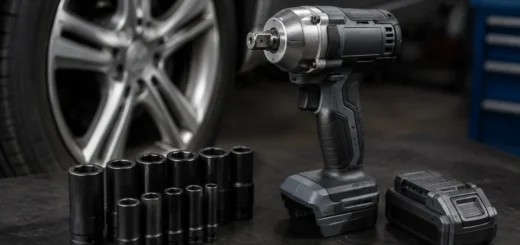
For occasional wheels, look for a 1/2-inch drive, variable speed or a usable low setting, and a battery platform you can keep using. A short anvil fits tight wheel wells better than a bulky extended one. For suspension work, consider access and control as much as peak torque. An impact can spin off a nut quickly, but it can also damage threads, snap a smaller fastener, or turn a captive stud if you keep hammering after the nut stops moving.
Cordless versus air: compare the whole cost
| Option | Best for | Value trade-off |
|---|---|---|
| Compact cordless 1/2-inch wrench | Occasional wheel changes and light repairs | Convenient and easy to store; battery and charger can make a bare tool a poor deal. |
| Mid-torque cordless 1/2-inch wrench | Regular tire work and mixed home repairs | More useful reserve power; costs more and can be bulky in confined spaces. |
| Air 1/2-inch impact wrench | A garage with an existing compressor and hose | Low tool cost is attractive, but compressor capacity, fittings, and hose matter. |
| High-torque cordless wrench | Frequent stubborn fasteners or heavier work | Strong capability, but often unnecessary for seasonal tire rotations. |
If you already own batteries, a compatible cordless 1/2-inch impact wrench is usually the convenient choice. Check whether the listed price includes a battery and charger. A bare tool may look inexpensive until you add a battery; buying into a new platform for one wrench can erase the savings.
An air wrench is only a bargain if the compressor can keep up. Check the wrench’s required CFM at its stated pressure, then compare that with the compressor’s delivered CFM—not just the tank size or a large, optimistic horsepower label. A small compressor may run a wrench briefly and then lose pressure during repeated work. That means slower removal, not necessarily a weak wrench.
Which budget level makes sense?
For a few wheel changes each year, a compact or entry-level cordless tool can be enough if you accept that one badly rusted lug nut may need a breaker bar. A mid-torque wrench is a better all-rounder if you also expect to remove brake, steering, or suspension hardware. Before buying on torque numbers alone, compare reviews for actual lug-nut removal, battery size, speed control, and warranty support.
A mid-torque cordless impact wrench is often the value sweet spot: more reserve than a compact model without paying for a high-torque tool many home users rarely need. If you already have a suitable compressor, an air 1/2-inch impact wrench can cost less upfront. Include the price of an impact-rated hose and fittings, and don’t buy an air tool before checking compressor performance.
For a simple comparison between brands, price the complete kit on the battery platform you own. A discounted bare tool from one brand can be worse value than a slightly more expensive kit from another if it needs a new charger and battery. Also consider warranty access and local availability: a tool you use twice a year does not need professional-service support, but a dead battery can make the whole purchase useless.
Use the wrench without damaging the job
Use impact-rated sockets, not thin chrome sockets. Chrome can crack under repeated impact. Support the vehicle on rated jack stands on firm, level ground; never work beneath a vehicle held only by a jack. For wheels, loosen nuts with the vehicle safely supported, then spin them off. When reinstalling, start each nut by hand to avoid cross-threading and snug it with the wrench’s lowest useful setting—or use a hand tool.
Finish wheel nuts with a calibrated torque wrench set to the vehicle maker’s specification, using the specified tightening pattern. An impact wrench can over-tighten a lug nut in seconds. That can stretch studs, distort a brake rotor, or make roadside removal difficult. Recheck the manual for any required retorque interval; some manufacturers call for a check after driving.
For suspension bolts, stop if the tool is hammering without progress. More trigger time can heat and damage the fastener or round its head. Try penetrating oil, a correctly fitted six-point socket, and a breaker bar; keep the wrench square to the fastener. If a bolt turns with a bushing sleeve or a stud spins freely, forcing it harder may turn a straightforward repair into a cut-and-replace job.
When to buy—and when not to
Seasonal tire-change sales can lower kit prices, but compare the included battery capacity, charger, and warranty rather than the headline discount. A small battery can work for a wheel rotation; repeated suspension work is easier with a larger pack, though it adds weight. If you only change tires once or twice a year and already own a breaker bar and torque wrench, borrowing or renting an impact may be better value than buying a high-torque model.
For most home users, the sensible purchase is a 1/2-inch mid-torque cordless wrench on a battery platform they already own, or an entry-level air wrench if a suitable compressor is already in the garage. Choose the cheaper tool when your jobs are occasional and you can handle stubborn fasteners by hand. Pay more only for a real need—frequent use, tight access, or repeated work on seized hardware—not for a maximum-torque number you are unlikely to use.