Best Budget Tools for Mounting Shelves on a Concrete Wall
What's inside
As an Amazon Associate I earn from qualifying purchases. This post may contain affiliate links at no extra cost to you.
What you need for a shelf on concrete
For a straightforward shelf installation, the basic setup is a hammer drill, a masonry bit sized for the anchors, and screws or masonry anchors rated for the shelf and its load. A regular drill with a masonry bit can manage small holes in soft brick or a few light-duty fixings, but poured concrete is a different proposition: drilling is slower, bits get hot, and pushing harder can burn out a budget drill without making much progress.
First check what is behind the wall. Concrete block, poured concrete, and brick need different approaches, and plumbing or electrical lines can make drilling unsafe. Use a suitable detector where wiring or pipes may run, and avoid drilling near outlets, switches, or plumbing unless you know the route. If the wall is reinforced concrete, you may hit rebar; do not try to drill through it blindly.
As an Amazon Associate we earn from qualifying purchases at no extra cost to you.


Budget tool picks and trade-offs
For occasional shelf jobs, a corded hammer drill is often the best value. It does not depend on battery condition, and you can usually buy one for less than a bare cordless tool from a major battery platform. A decent budget model is adequate for several small holes, though it may be slower and louder than a more powerful rotary hammer.
If you expect to drill many holes, or the wall is hard poured concrete, consider a small SDS-plus rotary hammer. Its hammering action is more effective than the impact mechanism in a standard hammer drill. The upfront cost is higher, and SDS bits are a separate purchase, but the tool can save time and reduce the temptation to force a standard drill.
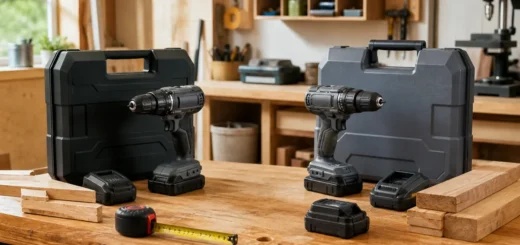
A cordless hammer drill makes sense if you already own compatible batteries. Buying into a new battery system just for one shelf can erase the apparent bargain. For a one-off job, borrowing or renting a rotary hammer may be cheaper than buying one.
Compare current corded hammer drills and SDS-plus rotary hammers, but check what is included. Some low-priced listings omit a suitable masonry bit, case, or depth stop.
Which tool is the better buy?
| Tool | Best fit | Budget trade-off |
|---|---|---|
| Regular drill | Very light work in soft masonry, if the tool has a hammer setting | Slow in hard concrete; a drill without hammer action is a poor choice for repeated holes |
| Corded hammer drill | One or several shelf installations | Good low-cost capability, but more vibration and slower drilling than an SDS-plus tool |
| Cordless hammer drill | Jobs away from outlets or existing battery-platform owners | Convenient, but batteries and charger can raise the total cost |
| SDS-plus rotary hammer | Hard concrete, multiple holes, or repeat projects | Higher purchase price and SDS bits; often worth it when drilling time matters |
Do not skimp on the bit or anchors
A sharp carbide-tipped masonry bit matters more than a long list of drill features. Match the bit diameter to the anchor instructions exactly; a hole that is too wide can leave the anchor loose, while an undersized hole can split a plug or prevent it seating. For common plastic plugs, sizes around 6 mm (about 1/4 inch) are used for light fixings, but follow the packaging rather than guessing. Use an appropriate bit for your drill: SDS bits do not fit a standard chuck without the right adapter.
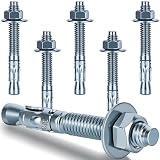
Plastic masonry plugs are inexpensive and often fine for a small shelf holding light items, provided the concrete is sound and the screws and plugs are correctly matched. For heavier loads, deeper fixings, or shelves that may be pulled forward, use a load-rated masonry screw or anchor suited to the wall material. Check the manufacturer’s stated limits and remember that ratings depend on concrete strength, embedment depth, spacing, and installation. A shelf bracket also creates leverage: a load near the front edge puts more stress on the fixings than the same weight placed against the wall.
Browse concrete anchors and masonry screws by intended wall type and load, not just by pack price. A large assortment of generic plugs is not a bargain if it leaves you with the wrong diameter or no load information.
Drill clean holes without damaging the wall
Mark the bracket holes, check that the shelf will be level, and confirm the bracket spacing. Start with the drill square to the wall and use a depth stop or tape on the bit to avoid drilling deeper than the anchor requires. Let the bit cut; steady pressure is enough. Pull it out occasionally to clear concrete dust, especially in deep holes. If progress stops, the bit may be worn, the drill may lack power, or you may have reached aggregate or rebar. Stop and reassess rather than leaning harder.
Wear eye protection and hearing protection, and keep hands clear of the bit. Concrete dust is harmful to breathe, so use a suitable dust-control method or vacuum attachment and avoid blowing dust into the room. Before installing an anchor, clear loose dust from the hole; trapped dust can stop it seating fully and weaken its grip.
Common failure signs include a plug spinning as the screw tightens, a hole that crumbles at the opening, or a bracket that shifts under light pressure. Do not solve these by fitting a larger screw into the same damaged hole. Move the fixing if the bracket layout allows, or use a repair method and anchor designed for the situation. If the concrete is cracked or crumbling, a shelf carrying valuable or heavy items deserves a more careful assessment.
When to spend more—and when not to
For two or four holes supporting a light shelf, a basic corded hammer drill and properly matched anchors are usually enough. Paying extra for a high-end cordless kit or a large rotary hammer is hard to justify if the tool will sit unused afterward. Spend instead on a fresh, correctly sized masonry bit and reliable fixings.
Move up to an SDS-plus rotary hammer when you have several shelves, hard poured concrete, or frequent masonry work. Watch for seasonal promotions around major holiday sales and spring renovation periods, but compare the complete kit price: tool, battery or cord, charger, bit, and case. A discounted bare tool is good value only if you already have its battery platform. For a single difficult wall, rental can beat both a rushed cheap purchase and a premium tool you will rarely use.