Best Affordable Scroll Saw for Detailed Craft Cutting
What's inside
As an Amazon Associate I earn from qualifying purchases. This post may contain affiliate links at no extra cost to you.
What matters in an affordable scroll saw
A scroll saw is for cutting curves, tight inside corners, and small parts from wood or other sheet material. It is not a substitute for a jigsaw on rough, large cuts: its thin blade cuts slowly, and its small table limits the workpiece. For occasional fretwork, ornaments, toys, and craft patterns, a budget machine can be entirely adequate if it holds the blade securely and does not shake the work off the table.
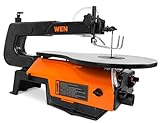
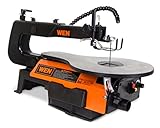
Start with blade changes and control, not the largest advertised throat depth. A 16-inch throat is enough for many small projects; a deeper throat helps when cutting larger panels but does not make the saw more precise. Look for variable speed, a work light, and a table that tilts for bevels. Check whether the machine accepts both pinned and pinless blades. Pinless blades are narrower and useful for detailed work, while pinned blades are quicker to install but need a larger entry hole for interior cuts.
As an Amazon Associate we earn from qualifying purchases at no extra cost to you.


Where budget saws save money
Entry-level saws commonly have more vibration, less refined speed control, and basic blade clamps. Those shortcomings show up as wandering cuts, louder operation, and extra time spent changing blades. Vibration can also loosen a small workpiece or make it harder to follow a pencil line. A sturdy bench helps, but it cannot fix a poorly aligned blade or a clamp that lets the blade twist.
For light use—say, a few hours a month cutting thin plywood or softwood—a basic saw is often a sensible buy. It is less appealing for daily production, thick hardwood, or work where clean, repeatable cuts matter. Before paying extra for a larger machine, compare the price of replacement blades and whether the saw takes common blade types. A cheap saw with proprietary or awkward-to-source parts can become poor value.
Budget, midrange, or used?
| Option | Best for | Typical trade-off | What to check |
|---|---|---|---|
| New entry-level saw | Occasional crafts and learning | More vibration; simpler clamps and dust control | Variable speed, blade compatibility, return policy |
| Midrange saw | Frequent detailed work | Higher upfront cost | Clamp access, table stability, service parts |
| Used quality saw | Buyers comfortable inspecting tools | Wear or missing parts can erase the savings | Arm play, motor noise, table flatness, blade holders |
Prices vary by retailer and season, so compare current listings rather than relying on a fixed “good price.” A budget variable-speed scroll saw is a reasonable starting point for hobby use. If you cut every week, compare it with midrange scroll saws that accept pinless blades; easier blade changes can matter more than a modest increase in throat depth.
Match the blade to the material
Blade choice affects cut quality as much as the saw. Fine blades handle small curves and thin stock, but they cut slowly and can break if pushed sideways. Coarser blades clear chips faster in thicker material but leave a rougher edge and have a wider turning radius. Use a scrap piece of the same material to test the speed and blade before starting the finished part.
Most craft cutting is comfortable in stock around 1/8 to 1/2 inch thick. Thicker material is possible, but it demands a suitable blade, slower feed, and a saw that does not flex or lose speed under load. If the blade repeatedly breaks, check for excessive feed pressure, a dull or damaged blade, too much tension, or a sharp turn that is tighter than the blade can manage. Burning usually points to a slow feed, a dull blade, or a blade that is rubbing rather than cutting cleanly.
Setup that improves the cut
Mount the saw securely to a bench. If the bench itself rattles, add a solid mounting surface or vibration-damping material beneath the machine. Set blade tension according to the saw manual; too little tension encourages wandering, while too much can snap a blade or strain the holders. Make sure the blade is square to the table for straight-through cuts. A quick test on scrap is more reliable than assuming the factory setup is perfect.
Keep the workpiece flat against the table and let the blade do the cutting. For an interior cut, drill an entry hole large enough to pass the blade through, install the blade, and retension it before cutting. Wear eye protection, keep fingers out of the blade path, and use dust extraction or a suitable mask when cutting dusty material. The small blade is less intimidating than a circular saw, but it can still injure fingers and throw chips.
When to spend more—and when not to
Pay more if you routinely make intricate cuts, need frequent interior starts, or expect the saw to run for long sessions. Better blade clamps, lower vibration, and accessible controls save time every project. A scroll saw blade assortment and compatible accessories may also be a more useful upgrade than a larger saw if your current machine cuts steadily but came with poor blades.
On the other hand, there is little reason to pay for a professional-grade machine if you make a handful of seasonal ornaments each year. Buy a basic saw from a seller with a workable return window, inspect the blade holders as soon as it arrives, and make several test cuts before committing to a project. Holiday and end-of-season sales can reduce prices, but compare the exact features and included parts: a discounted machine without the blade type you need is not automatically a bargain.