Best Value Modular Tool Storage for a Growing DIY Collection
What's inside
As an Amazon Associate I earn from qualifying purchases. This post may contain affiliate links at no extra cost to you.
Why modular storage can be good value
A growing DIY collection rarely needs a full workshop cabinet all at once. Modular storage lets you start with a few cases and add capacity as your tools change. The catch is that the boxes, drawers, and carts in a system can cost more than ordinary storage, and parts from different brands usually do not lock together.
For value, judge a system by what you will store, how often you move it, and the cost of adding pieces later. A stack that stays in the garage does not need the same impact resistance or wheels as one you carry to jobsites. Paying extra for transport features you never use is wasted money; buying a flimsy case for heavy tools can mean replacing it sooner.
As an Amazon Associate we earn from qualifying purchases at no extra cost to you.



Choose the format before the brand
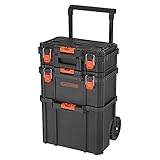
Cases with latches and handles are the lowest-cost entry point for drills, batteries, and small accessories. They stack neatly, but tools can be awkward to reach when one case sits on another. Drawer units cost more and make frequently used items easier to access, though drawers can be less convenient for bulky tools. Rolling bases are useful for moving a heavy stack across a garage or driveway, but wheels add cost and can be a weak point on rough ground.
Start by measuring the storage spot and the largest tool you need to fit. Allow room for batteries, chargers, and the handle or hose on a tool; a case that fits the bare tool may not fit its useful accessories. If you own only a drill, driver, and a few hand tools, a pair of stackable cases may be enough. If you are regularly lifting a stack with more than roughly 40 to 50 pounds of contents, a rolling base or smaller separate loads can be easier and safer.
Compare the real cost
Prices vary by retailer and season, so compare the pieces in the configuration you will actually buy. A low-priced starter bundle can be a strong deal if it includes useful storage, but less attractive if it is mostly small organizers you do not need. The table below compares common approaches, not individual product specifications.
| Option | Typical value | Best for | Main trade-off |
|---|---|---|---|
| Basic stackable cases | Low upfront cost | Garage storage and occasional carrying | Limited access to lower cases in a stack |
| Drawer modules | Medium to high | Small tools and parts used often | Higher cost; drawers may not fit bulky gear |
| Rolling base plus cases | Medium to high | Moving several loaded modules together | Wheels add cost and can struggle on gravel or steps |
| Open bins and organizers | Low to medium | Fast access to consumables and loose parts | Less protection from dust, rain, and spills |
For a budget start, compare stackable modular tool storage cases with ordinary lidded totes. If the cases will stay on a shelf, totes may be cheaper and perfectly adequate. Cases earn their keep when you carry them, need repeatable stacking, or want separate loads for electrical, plumbing, and general repair work.
Compare systems, not just starter kits
Major tool brands sell modular storage that may match their own batteries, tools, and accessories, but a familiar logo does not guarantee the best price. Check the cost of a spare case, a drawer module, and a rolling base. Those are the pieces you are most likely to add later. Also check dimensions and locking compatibility: products that look similar may not latch securely to another system.
Before buying, inspect the latch design, handle, and wheel attachment. A latch that flexes when the lid is loaded can pop open if the case is dropped. A narrow handle can be uncomfortable with a heavy load. Small wheels may roll well on a smooth concrete floor but snag on expansion joints, gravel, or a garage threshold. If you can, handle a loaded display unit in person; empty boxes conceal many of these problems.
For a mixed collection, a modular tool storage drawer system can be worth the premium for bits, fasteners, and hand tools you reach for repeatedly. It is less compelling for a rarely used sander or bulky saw that fits better in a basic case. Avoid buying a drawer tower just because it looks organized: count the tools and parts first, then make sure the drawer dimensions suit them.
When to buy and when to wait
Tool storage often gets discounted during major holiday sales, Father’s Day promotions, and tool-brand events. Bundles can offer better value than buying the same pieces separately, but compare the bundle price with the current cost of each component. A discount is not useful if the set includes modules you would not otherwise buy. Check whether the seller is reputable and whether returns are practical; oversized storage can be costly to ship back.
Do not delay a useful purchase for a hypothetical sale if poor storage is already damaging tools or wasting time. But if your current boxes work, write down the pieces you want and track prices for a few weeks. That gives you a baseline and helps distinguish a genuine markdown from a temporary list-price change.
Build a system in stages
A sensible starter setup is one case for power tools and batteries, one organizer for bits and fasteners, and—only if you need to move the collection—a compatible rolling base. For a garage-only setup, start with cases or a shelf and add drawers after you learn what you access most. Keep heavy tools low in the stack; putting a loaded case above shoulder height increases the chance of dropping it.
Use dividers or small containers for screws and fittings rather than filling one large compartment. Loose parts migrate when a case tips, and mixed fasteners take time to sort. Label the outside by task or contents, not by the tool brand. If your collection spans brands, choose storage around the job you do—such as electrical repair or woodworking—rather than expecting every tool to share a case.
Spend where storage gets used
Pay for secure latches and a compatible rolling base when you routinely transport a loaded stack. Choose drawers when quick access matters more than low upfront cost. For tools that sit in a dry garage, basic cases, shelves, or totes can be a better value than a premium ecosystem. The best modular setup is the smallest one that protects what you own and leaves room for the tools you are likely to add next.