Best Affordable Rotary Tool Kit for Detail Work and Small Craft Projects
What's inside
As an Amazon Associate I earn from qualifying purchases. This post may contain affiliate links at no extra cost to you.
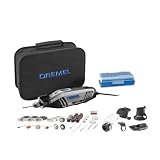
A low-cost rotary tool can handle engraving, light sanding, polishing and small trim jobs without the cost of a professional setup. The useful question is not how many accessories come in the box, but whether the tool runs smoothly at low speed, accepts common attachments and comes with a power supply suited to the work.
As an Amazon Associate we earn from qualifying purchases at no extra cost to you.


What matters for detail work
Variable speed is essential. Engraving plastic, polishing soft metal and sanding wood call for different speeds; a tool that only runs fast can melt plastic, burn wood or make a small bit harder to control. Look for a usable range roughly from 5,000 to 30,000 RPM. The exact range matters less than being able to start slowly and adjust without the tool surging.
For short craft sessions, a corded tool is usually the better value: it avoids battery costs and does not run out of charge halfway through a job. A compact cordless kit can be more convenient for occasional work on pieces away from an outlet, but check the stated runtime and whether the battery is replaceable. “Cordless” alone does not tell you whether the tool has enough run time for sustained sanding.
Grip and vibration are easy to underestimate. A lighter tool with a narrow body is easier to guide for lettering or detail sanding. If possible, hold one before buying. Excessive vibration makes precise work tiring and can loosen small accessories.
Which affordable kit makes sense?
For occasional home use, compare a corded variable-speed rotary tool kit with a cordless rotary tool kit. Corded kits commonly cost less for the power and accessories included. Cordless is worth paying extra for when moving around a workbench matters more than uninterrupted run time.
A bargain kit may include dozens of bits, but many are duplicates or consumables you will rarely use. Check that it includes a collet wrench, several common collet sizes or a compatible universal collet, and a case that keeps bits sorted. A flexible shaft can help with fine engraving, but it adds another part to store and is only useful if the tool supports it properly.
Comparing common budget options
| Kit type | Best for | Trade-off | What to check |
|---|---|---|---|
| Basic corded kit | Occasional sanding, cutting and polishing | Less convenient away from an outlet | Low-speed control, vibration and included collets |
| Cordless kit | Small jobs around the home or craft table | Higher cost; runtime may limit longer jobs | Battery capacity, charging time and replacement availability |
| Accessory-heavy kit | Beginners who want a range of bits to try | Included bits may be low quality or redundant | Whether common replacement accessories fit |
| Tool-only or small kit | Owners who already have compatible accessories | May require extra spending before it is useful | Collet compatibility and total cost with essential bits |
Spend on the accessories you will use
For small craft projects, start with a modest selection: a few sanding drums, a small grinding stone, felt polishing wheels and diamond-coated bits for glass or hard materials. A rotary tool accessory kit with diamond bits and sanding drums can be economical if the shank sizes match your tool. Check the package rather than assuming every accessory fits every collet.
Cheap cutting wheels are a common weak point. They can wear down quickly, bind, or break if pushed sideways. Use the wheel rated for the material, keep the tool moving, and let it cut without forcing it. Wear eye protection; small fragments can travel fast. For repeated cutting, better-quality reinforced wheels are often a wiser purchase than replacing a large pack of fragile discs.
Match the accessory to the material. Sanding drums remove material quickly but can leave deep scratches; use finer grits to finish. Polishing wheels need the correct compound and light pressure. On plastic, begin at low speed and test an inconspicuous spot—friction can soften or melt the surface before the finish looks damaged. A felt polishing kit for rotary tools is a sensible add-on if polishing, rather than cutting, is your main task.
Avoiding common problems
Runout—visible wobble at the bit tip—makes precise engraving and sanding difficult. A bit that is bent or not seated fully can cause wobble too, so check those before blaming the tool. Tighten the collet securely, but do not overtighten it. If several straight, undamaged bits wobble in the same way, return the tool rather than trying to compensate with pressure.
Overheating is another failure mode. A small rotary tool is not a substitute for a die grinder or a full-size angle grinder. Long, heavy cuts strain the motor and can shorten its life. Work in short passes, clear dust, and pause if the body becomes uncomfortably hot or the motor slows under light pressure. For larger stock removal, the cheaper and safer choice may be the correct larger tool.
When to buy and where to save
For an entry-level kit, compare the complete package price, not just the advertised tool price. A low-cost bare tool can become poor value once you add a case, wrench and compatible accessories. Seasonal promotions around major retail sales can reduce kit prices, but do not pay more for a large accessory count unless you can identify bits you will actually use.
Pay extra for better speed control, lower vibration, a useful warranty and readily available replacement accessories. Save money on a cordless battery platform if you already own a compatible battery—or choose a basic corded kit if you expect only occasional short sessions. For engraving, miniature sanding and light craft work, a plain variable-speed corded tool is often enough. For frequent mobile use, cordless convenience may justify the premium; for heavy cutting, neither budget category is the right tool.