Gifts for Woodworkers: What They Want but Will Not Buy Themselves
Key takeaways
- Woodworkers buy tools and neglect everything else. That gap is your gift list.
What's inside
As an Amazon Associate I earn from qualifying purchases. This post may contain affiliate links at no extra cost to you.
Woodworkers spend on machines and skimp on the things that actually improve their work. That makes them easy to buy for, as long as you avoid buying an actual power tool. The person you are shopping for has probably spent a year justifying a bandsaw upgrade to themselves while sharpening chisels on a stone that was worn hollow before you met them. The gap between what they own and what they need is not in the machine department. It is in layout, clamping, sharpening and shop comfort, which are exactly the categories they will never prioritise with their own money.
The rule that makes this easy: buy the thing that gets consumed, the thing they can never have enough of, or the thing that is boring but improves every single session. Avoid the thing that has a model number they have opinions about.
As an Amazon Associate we earn from qualifying purchases at no extra cost to you. Product prices and availability are accurate as of the date shown and are subject to change.


How to weigh a woodworking gift before you buy it
Four criteria, and they work at every price. Run any candidate through them and the bad ideas fall out on their own.
- Is it consumed or accumulated? Sandpaper, glue, tape and blades get used up. Clamps get accumulated. Neither category can be over-supplied, so neither can be a duplicate, which removes the single biggest risk in tool gifting.
- Does it depend on a decision they have already made? Batteries, dust port diameters, router collets, blade arbors and lumber species are all decisions you would be guessing at. Layout tools, abrasives, sharpening media and shop comfort items are not.
- Would they feel guilty buying it themselves? This is where the good gifts live. Nobody feels guilty buying a router bit. Plenty of people postpone an air filtration unit for a decade because it does not make anything.
- Does quality change the experience, or just the price? On a marking knife, a square, or a sharpening stone, quality is the whole product. On a spring clamp, cheap is fine. Spend accordingly.
Under $30
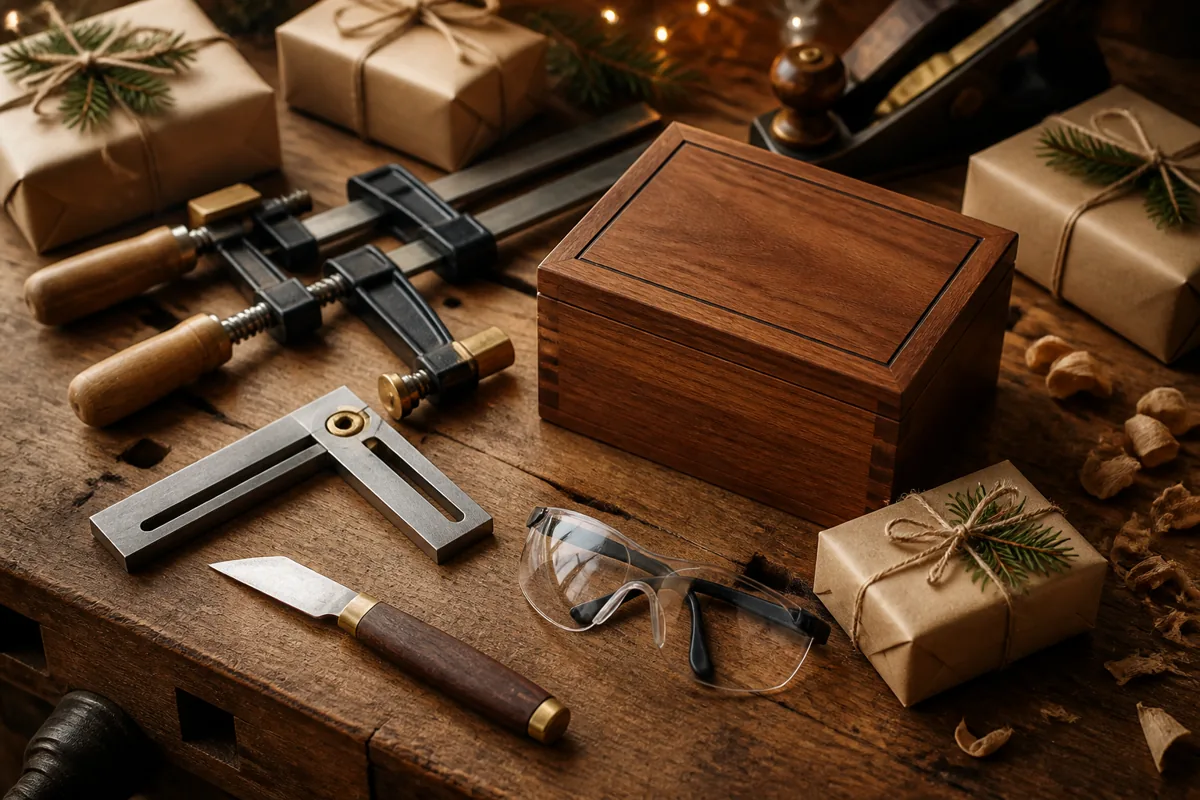
Marking knife, a quality combination square, pencils and marking gauges, sandpaper assortments, glue, blue tape, a card scraper. Small, consumable, always welcome.
This band is where the highest-value gifts hide, because it is the band woodworkers treat as beneath their attention. They will happily agonise over a $400 purchase and then buy the cheapest square on the shelf because it was there.
What separates a good pick from a bad one here
On a combination square, the only thing that matters is whether it is actually square, and whether it stays square. Look for a machined steel or cast body rather than stamped sheet, a blade that locks without wobble, and a brand that will replace an out-of-tolerance unit. A cheap square is worse than no square, because it teaches the user to distrust their own accuracy instead of the tool.
On a marking knife, the criteria are the bevel grind and the handle. A single-bevel blade registers flat against a straightedge, which is the entire point; a double-bevel spear point is more versatile for dovetail layout but slightly less precise against a rule. Either is fine, and either is better than the pencil line they are using now.
On abrasives, buy an assortment across grits rather than a bulk pack of one grit, unless you know what they sand most. Hook-and-loop discs need to match the hole pattern of their sander, which is a detail worth checking; sheet abrasive and hand-sanding sponges have no compatibility risk at all.
Who this suits: everyone, at any experience level, and especially anyone whose shop already looks well-equipped. Who should skip it: nobody, though if this is your only gift consider bundling three or four items so it reads as a kit rather than an afterthought.
Marking and layout tools
Layout accuracy is where good work starts, and most woodworkers are still using the square they bought first.
$30–75: clamps and abrasives
There is no such thing as enough clamps. Bar clamps, F-clamps, spring clamps, band clamps — any of them will be used within a week. Bulk sanding disc packs are similarly always welcome.
Clamps are the safest gift in woodworking because the failure mode of buying the wrong one is that it gets used for something else. There is no such thing as a wasted clamp.
Choosing between clamp types
- F-clamps and bar clamps are the workhorses. Judge them on jaw depth (how far in from the edge they can reach), whether the sliding jaw racks under load, and whether the pads swivel and stay attached. Two or three good ones beat six flimsy ones.
- Parallel clamps keep the jaws square to the bar, which is what makes a case assembly come out square. They cost more per clamp than anything else in this list, so a single pair is a legitimate gift on its own.
- Spring clamps are where cheap is genuinely fine. Buy a mixed bag.
- Band and strap clamps solve mitred frames and odd shapes that no bar clamp will hold. Almost nobody owns one. Almost everybody eventually needs one.
The common mistake in this band is buying a large set of very light-duty clamps to make the gift look generous. Volume looks impressive under wrapping paper and disappoints at the bench, because a clamp that flexes under pressure cannot close a glue line. If you want to spend $60, two solid mid-length bar clamps are a better gift than ten toy ones.
Who this suits: anyone doing glue-ups, which is nearly everyone. Who should skip it: a pure carver or turner, whose clamping needs are different and mostly already met.
Clamps
The single safest woodworking gift. Every woodworker wants more and none of them buy enough.
$75–150: sharpening and finishing
A good waterstone set, a honing guide, a strop, or a quality finishing kit. Sharpening gear in particular transforms hand-tool work and is something people postpone buying.
This is the band with the largest gap between cost and effect. A sharpening setup does not make anything by itself, which is exactly why it goes unbought, and it improves every chisel, plane, knife and gouge in the shop the day it arrives.
What to look for, and what to ignore
The decision that matters is the medium: waterstones, diamond plates, or sandpaper on glass. Waterstones cut fast and give the finest edge, at the cost of soaking, mess and periodic flattening. Diamond plates stay flat forever and work with just water, but wear in over time and are less pleasant to use. Sandpaper on a flat substrate is the cheapest entry and the most consumable. If you have no idea which camp they are in, a mid-grit and fine-grit combination stone plus a honing guide is the least controversial gift in the category.
Two accessories matter more than people expect. A flattening plate or lapping stone, because a dished stone cannot produce a straight edge, and a honing guide, because repeatable bevel angles are what turn sharpening from a skill you practise into a task you complete. Ignore anything marketed on the number of grits included; three useful grits beat eight overlapping ones.
On finishing kits, the criteria are shelf life and versatility. Oil and wax finishes tolerate a beginner and store for years. Multi-part film finishes have working windows, mixing ratios and a real chance of sitting unopened until they cure in the can. Brushes, applicators, abrasive pads and a decent set of nitrile gloves are quietly one of the better gifts in this band, because they are consumed constantly and bought reluctantly.
Who this suits: anyone with hand tools, and anyone who has ever complained that their chisels are dull. Who should skip it: someone who already owns a full sharpening station — in which case buy the consumable half, a strop and compound or a flattening plate.
Sharpening kits
A 1000/6000 stone and a honing guide will improve every chisel and plane they own.
$150+: shop quality of life
An air filtration unit, a good shop vacuum, a quality dust mask system, decent shop lighting, or an anti-fatigue mat. Unglamorous, and genuinely appreciated every single session.
Nothing in this band makes a project. Everything in it makes projects more pleasant and the person doing them healthier, which is why it stays permanently at the bottom of their own shopping list.
Weighing the options against each other
- Air filtration handles the fine airborne dust that a vacuum misses entirely — the particles that stay suspended for hours after the sander stops. Match the unit’s rated airflow to the size of the shop and check what replacement filters cost, because that is the real long-term price.
- Respirators are the highest-value item here per dollar. A proper half-mask with replaceable particulate cartridges, or a powered unit if they wear glasses or a beard and struggle to get a seal. Fit is the whole product; a mask that does not seal is decoration.
- Shop vacuums should be judged on hose diameter, filtration quality and noise, not peak horsepower claims. A vacuum with a fine-dust-rated filter and a bag option collects what an open-filter machine blows back into the room.
- Lighting is the most underrated gift on this page. Shadows on a workpiece cause more layout errors than shaky hands. Look for high output, a neutral colour temperature and even coverage rather than one bright fixture in the middle of the ceiling.
- Anti-fatigue matting costs little, requires no compatibility checks, and changes how long someone can comfortably stand at a bench. Buy thickness over surface area.
The mistake in this band is buying capacity instead of quality of capture. A larger machine that leaks fine dust is worse than a smaller one that traps it, and a bigger vacuum without proper filtration simply redistributes the problem at higher velocity.
Who this suits: anyone working in a garage, basement or shared space, and anyone who sands indoors. Who should skip it: someone who works almost entirely with hand tools and produces shavings rather than dust — spend the money on sharpening or lighting instead.
Shop air filtration and dust gear
Woodworkers postpone dust control because it is not exciting. It is the gift they will thank you for in ten years.
What to avoid
- ✘ Power tools, unless you know the exact model they want
- ✘ Cheap chisel and plane sets — quality matters enormously here
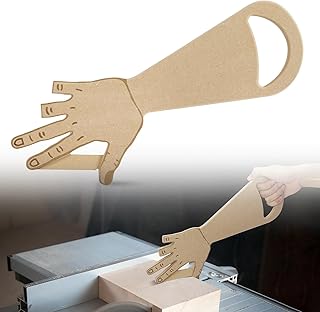
- ✘ Novelty “woodworker” gadgets
- ✘ Exotic wood without knowing their project plans
- ✘ Anything requiring a specific battery platform you have not verified
Each of these fails for the same underlying reason: it depends on information you do not have. A power tool depends on their platform, their bench space and their opinion of the brand. A cheap chisel set depends on steel quality you cannot assess from a listing, and a chisel that will not hold an edge teaches a beginner that hand tools do not work. Exotic wood depends on the project, the thickness, the grain and whether they have a jointer wide enough to handle it.
The related mistake is buying the second copy of something they already have one of, in a category where one is enough. Nobody needs two block planes. Everybody needs more clamps. Know which category you are in.
FAQ
What if they have everything? Consumables and clamps. Both get used up or wanted in greater number. Beyond that, look at what is worn rather than what is missing: a dished sharpening stone, a shop vacuum filter that has never been replaced, a bench light that was there when they moved in.
Is lumber a good gift? A gift card to a hardwood dealer is better — species and dimensions are personal. A board that is the wrong thickness for their planer or too wide for their jointer becomes a guilt object leaning against a wall.
Best gift for a beginner woodworker? Clamps, a good square and a sharpening setup, in that order. Beginners are usually short on clamps and long on enthusiasm, and accurate layout plus a sharp edge removes most of the frustration that makes people quit.
How do I buy for someone whose skill level I cannot judge? Stay in the consumable and comfort categories. Abrasives, glue, tape, finishing supplies, good lighting and hearing or respiratory protection are correct for a first-year hobbyist and a thirty-year professional alike, and none of them require you to know a single thing about what is already on their bench.
See woodworking gifts →