How to Tell Whether a Tool Bundle Includes Useful Accessories
What's inside
As an Amazon Associate I earn from qualifying purchases. This post may contain affiliate links at no extra cost to you.
A bundle is good value only when its extras solve jobs you actually have. A drill kit with two batteries may be useful; the same kit with a pile of low-quality bits you replace immediately may cost more than buying the drill and accessories separately. Before paying for a bundle, check what each item does, whether it fits your tools, and what it would cost to replace.
Start with the core tool
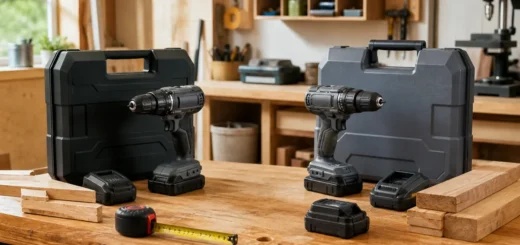
Compare the bundle’s main tool with the bare-tool or smaller-kit version. Check the tool’s capabilities, warranty, and included battery capacity before valuing the extras. For cordless tools, a second battery can be more useful than a handful of accessories, especially if you work away from an outlet or use the tool for long stretches.
Battery capacity is usually listed in amp-hours (Ah). A 2.0 Ah battery is lighter and often adequate for occasional household jobs; a larger battery can run longer but adds weight and may cost more. Don’t assume every battery in a bundle is the same size. Read the listing carefully, including whether the kit includes a charger.
If the core tool is a cordless drill kit, consider whether its chuck, speed settings, and power suit your work. Accessories cannot make an underpowered or unsuitable tool a bargain.
Sort the extras by how often you’ll use them
Put bundle contents into three groups: needed now, likely useful later, and unlikely to use. A homeowner hanging shelves may use a tape measure, driver bits, and a second battery. Someone building a deck may need impact-rated bits and several batteries. A large assortment of specialty bits may have little value if your projects are limited to basic repairs.
Be specific about compatibility. A bit set may have the right shapes but lack impact-rated bits for an impact driver. A saw bundle may include blades for wood when you need to cut metal. Sanding sheets must fit the tool’s pad, and vacuum attachments need to match the hose diameter or include an adapter. A small compatibility mismatch can turn a “free” extra into clutter.
For a basic home setup, a small impact-rated driver bit set can be a more practical purchase than a large, mixed collection. Buy the sizes and types you expect to use rather than paying for a higher piece count.
Compare replacement cost, not advertised value
Bundle listings may assign high prices to accessories that are inexpensive, low-quality, or difficult to use. Estimate what you would pay for the usable extras separately. Then compare the total bundle price with a bare tool plus the accessories you actually want. Use current street prices, not a claimed “regular price.”
| Bundle item | Useful when | Check before assigning value |
|---|---|---|
| Second battery | You work for long stretches or have no convenient charging break | Capacity, platform compatibility, and whether it is a genuine battery for that system |
| Charger | You are new to the battery platform or need another charging spot | Whether a charger is already included, and how quickly it charges your battery |
| Bit or blade assortment | The set includes sizes and materials matched to your tasks | Fit, material, and whether bits are rated for impact-driver use |
| Case or bag | You transport tools or need organized storage | Whether the tool and batteries fit securely, not just whether a case is pictured |
As an example, if a bundle costs $40 more than the bare tool and includes a second battery you would otherwise buy for $55, the battery may justify the difference. If it includes a $10 accessory set you won’t use, don’t count the set’s advertised value as savings. Account for sales, too: a bare tool discounted by $30 can make a bundle less attractive.
Watch for low-value extras and failure modes
Look for vague descriptions such as “50-piece accessory kit” without a clear list of contents. A high piece count can include duplicates, tiny sizes, or parts that wear quickly. Read product details and recent buyer feedback for complaints about broken bits, poor fit, missing pieces, or batteries that are not compatible with the tool’s platform.
Check the return policy and warranty coverage for the complete kit. Sometimes the main tool has a standard warranty while accessories have shorter or separate coverage. A case can also be a weaker point: thin plastic latches may break if you carry it in a truck or jobsite box, while a soft bag may not protect the tool from impact.
For cutting work, the wrong blade can burn wood, leave a rough cut, or wear out fast. For fastening, a worn or soft bit can strip a screw head. These are not reasons to reject every bundled accessory; they are reasons to treat consumables as a bonus unless their quality and suitability are clear. If you know you need a specific blade type, buying a replacement blade suited to your material may be better than relying on an unspecified one in the box.
Decide when the bundle is worth it
Choose the bundle when it includes a battery, charger, or accessory you will use soon and the price is lower than buying those items separately. Choose the bare tool when you already own compatible batteries, have the right accessories, or can get the tool alone at a strong sale price.
Seasonal promotions can change the math. Holiday and spring sales often discount kits, but compare prices across a few weeks if you can. A bundle may be a good purchase even if one extra sits unused, as long as the items you need make the total price competitive. It is not a deal just because the box contains more pieces.