Makita vs Milwaukee Jobsite Radios: Comparing Features, Price, and Durability
What's inside
As an Amazon Associate I earn from qualifying purchases. This post may contain affiliate links at no extra cost to you.
Makita and Milwaukee jobsite radios are built for the same basic task: providing usable sound in a dusty, noisy work area without tying you to an outlet. The better buy depends less on audio quality than on the battery platform you already own, how often the radio will be moved, and whether you need charging, Bluetooth range, or weather protection.
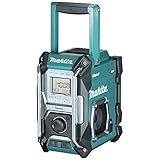
In broad terms, Makita radios tend to offer a more traditional radio design with good controls, clear sound, and broad compatibility across 18V LXT batteries. Milwaukee’s lineup leans heavily into the M18 system and often adds jobsite-focused features such as USB charging, reinforced protection, and storage for a phone. Neither brand is automatically the better value for every buyer.
As an Amazon Associate we earn from qualifying purchases at no extra cost to you.



Battery platform and price
The first calculation is simple: if you already own cordless tools, buy the radio that uses those batteries. A bare radio commonly costs about $90 to $180, depending on its speaker size and added features. A kit with a battery and charger can push the price above $200. Buying into a second battery platform just for a radio rarely makes financial sense.
Makita’s 18V LXT radios are useful for owners of drills, saws, and outdoor tools in that system. Milwaukee’s M18 radios make the same argument for M18 users. Battery prices matter more than the small difference between similarly equipped radios: an 18V or M18 battery can cost roughly $60 to $150, depending on capacity and whether it is sold in a promotion.
For a first-time buyer, compare the total cost rather than the sticker price. A bare radio may look inexpensive, but a radio kit can be the better deal during holiday tool promotions when a battery is included or heavily discounted. Check current Makita 18V LXT jobsite radios and Milwaukee M18 jobsite radios before assuming the bare-tool price is the lowest option.
Feature comparison
| Category | Makita | Milwaukee |
|---|---|---|
| Battery systems | Primarily 18V LXT; some models also run on AC power | Primarily M18; many models also offer AC operation |
| Typical bare-radio price | About $90–$180 | About $100–$200 |
| Wireless audio | Bluetooth is common on current models | Bluetooth is common on current models |
| Power options | Battery and, on many models, wall power | Battery and, on many models, wall power |
| Charging features | Varies; USB output is not universal | USB charging is common on feature-rich models |
| Best value for | LXT owners wanting dependable basic audio | M18 owners wanting tougher, feature-heavy designs |
Bluetooth performance is usually sufficient for a phone kept within 30 to 50 feet, though concrete walls, metal framing, and other wireless devices can shorten that range. AM/FM reception varies more by location than by brand. If you work inside a steel-framed building or below grade, streaming from a phone may be more reliable than depending on broadcast radio.
Sound and everyday usability
Jobsite radios are not hi-fi speakers. Their advantage is volume, protection, and convenience. Larger units generally produce fuller sound and remain easier to hear over a compressor or miter saw, but they also take up more bench space and consume more battery power at high volume.
For a small remodeling crew, a compact radio is often enough. A typical 5.0Ah battery can provide a full workday of moderate-volume playback, but maximum volume, cold weather, an aging battery, and USB phone charging can cut that sharply. Do not treat a radio’s runtime claim as a guarantee; manufacturers test under controlled conditions.
Controls are important with gloves. Large tuning and volume knobs are easier to use than tiny buttons, while Bluetooth pairing is most useful when it reconnects without repeated menu navigation. A phone compartment or bottle-style storage area is convenient, but it does not make the radio waterproof. Keep the phone in a sealed pocket if rain is likely.
Durability and common failure modes
Both brands build radios with protective bumpers and covered controls, but “jobsite tough” does not mean drop-proof or weatherproof. The most common failures are cracked control covers, damaged antenna sections, dust in buttons, and battery contacts that stop making reliable contact after repeated impacts.
Water is another practical limit. Light rain or a wet countertop may be tolerable on a protected model, but standing water, driving rain, and hose spray can reach speakers and circuit boards. A radio placed outdoors should sit under cover, with its battery compartment closed and its speaker facing away from blowing rain.
Milwaukee often has the edge when the radio will be carried and knocked around daily, especially in its larger, heavily guarded designs. Makita is still a sound choice for normal remodeling use, and its simpler controls can be preferable. A more complicated radio has more ports, covers, and switches that can eventually break.
Which one should you buy?
Choose Makita if you already own LXT batteries, want straightforward radio and Bluetooth functions, or find a discounted bare unit. The cheaper option is entirely fine for indoor work, occasional garage projects, and crews that keep the radio on a shelf rather than dragging it around a rough site.
Choose Milwaukee if you already use M18 tools and value stronger impact protection, convenient phone charging, or a feature-rich design. The premium is easier to justify when the radio runs every day, travels between jobs, and is likely to be exposed to repeated bumps.
If you own neither platform, consider a corded Bluetooth jobsite speaker or a less expensive battery-compatible radio before buying into a cordless ecosystem. For basic music, spending an extra $75 does not automatically produce better value. Put that money toward a battery, a protective case, or hearing protection instead.
Best time to buy
Watch for tool-bundle promotions around Memorial Day, Father’s Day, Labor Day, Black Friday, and the weeks before Christmas. The best offers often attach a free battery or another tool to a radio purchase rather than cutting the radio price dramatically. Compare the exact battery size: a small 2.0Ah pack is useful for portability, but a 5.0Ah pack usually provides more practical runtime.
Before ordering, confirm that the listing is for a bare tool or a kit, check the radio’s AC adapter, and verify the battery platform. A bargain radio that requires a new battery and charger can cost twice as much as a discounted model that fits tools you already own. For a simple shop or garage setup, also consider cordless Bluetooth jobsite speakers from other brands; they may deliver adequate sound for less if battery compatibility is not important.