Best Affordable Benchtop Drill Press for Small Woodworking Projects
What's inside
As an Amazon Associate I earn from qualifying purchases. This post may contain affiliate links at no extra cost to you.
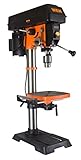
A benchtop drill press is one of the most useful machines for small woodworking projects, but you do not need an expensive cabinet-style press to drill accurate holes. A compact model with a 8- to 10-inch swing, a 1/2-inch chuck, and a 1/3- to 2/3-horsepower motor is enough for dowel holes, hardware installation, toy parts, small boxes, and basic furniture repairs.
The best affordable benchtop drill press is not necessarily the cheapest one. Low-cost presses can have excessive spindle runout, weak depth stops, small tables, or motors that stall in hardwood. For occasional work, those flaws may be tolerable. For repeatable joinery, they quickly become frustrating.
As an Amazon Associate we earn from qualifying purchases at no extra cost to you.

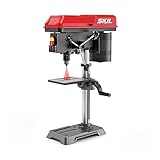
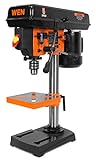
What to Look For in an Affordable Drill Press
Start with capacity. An 8-inch drill press has a maximum drilling circle roughly 8 inches across, while a 10-inch model gives more room around the column. For small woodworking, either size works, but a 10-inch press is usually easier to live with because its table and quill travel tend to be more useful.
Look for at least 2 inches of quill travel. Less travel means more repositioning when drilling through thick stock. A rack-and-pinion table that tilts and raises without excessive play is also important. A table that shifts when you tighten the lock can move a bit away from your layout mark.
Variable speed is valuable when working with different materials and bit sizes. A typical budget press may offer speeds from about 600 to 3,100 rpm through stepped belt pulleys. Low speeds suit large Forstner bits and hardwood; high speeds suit small twist bits. Electronic variable-speed controls are convenient, but inexpensive systems may have less torque at low speed than a pulley-driven press.
A 1/2-inch keyed chuck accepts most woodworking bits, including larger twist bits, brad-point bits, and many Forstner bits. A keyless chuck is faster for bit changes, but cheap keyless chucks can loosen under vibration. A keyed chuck is usually the safer value choice.
Best Affordable Benchtop Drill Press Categories
| Category | Typical price | Best for | Main compromise |
|---|---|---|---|
| Compact 8-inch press | $120–$180 | Small holes, crafts, light-duty repairs | Limited table size and throat depth |
| 10-inch benchtop press | $180–$300 | General woodworking and hardware drilling | Heavier and sometimes less refined |
| Variable-speed benchtop press | $250–$450 | Frequent bit and material changes | Higher cost; electronics can be a weak point |
| Used cast-iron press | $75–$250 | Maximum value for patient buyers | Condition and replacement parts vary |
For most small woodworking shops, a basic 8-inch benchtop drill press is fine if you mostly drill holes under 1/2 inch and work with pine, plywood, or occasional hardwood. It will usually cost less, take up less bench space, and consume less power. The cheaper option stops making sense when you need a larger table, deeper throat, or repeated holes in dense material.
The Best Value Size for Woodworking
A 10-inch press is often the value sweet spot. It provides enough reach for cabinet doors, drawer parts, small panels, and jigs without the cost or footprint of a floor model. Many 10-inch presses also include a larger table and longer quill travel than compact units.
Do not judge performance by motor horsepower alone. Budget manufacturers sometimes advertise peak horsepower rather than continuous output. A press advertised at 1/2 horsepower may perform similarly to another rated at 2/3 horsepower. The more useful clues are the machine’s weight, speed range, chuck quality, and user reports about stalling.
Expect any affordable press to struggle if you force a 1-1/2-inch Forstner bit through hard maple at a high speed. Use the lowest suitable speed, clear chips often, and let the bit cut instead of leaning heavily on the feed handles. A small press can handle demanding work if you reduce the feed rate and keep the bit sharp.
If you want more working room, compare 10-inch benchtop drill presses with 1/2-inch chucks. Pay attention to the actual table dimensions and quill travel, not just the swing measurement shown in the listing.
Common Failure Modes and How to Avoid Them
Runout is the most damaging problem for precision woodworking. It is the amount the bit wobbles as it spins. Excessive runout makes holes oversized, marks the workpiece, and can cause a Forstner bit to wander. For small joinery, roughly 0.003 to 0.005 inch of runout is very good; around 0.010 inch may still be usable for general hardware; more than that is difficult to ignore.
Quill play is another problem. With the machine unplugged, lower the quill and gently push it side to side. Noticeable movement suggests loose bearings or poor adjustment. A loose table can create similar errors, so tighten the column and table locks before testing accuracy.
Some budget presses have depth stops that drift during use. Test the stop with several repeated plunges before relying on it for a batch of holes. If it moves, use a separate stop block or mark the quill with tape. Never hold small parts by hand under the bit; clamp them to the table, especially when using hole saws or large Forstner bits.
Brand and Price Value
Established tool brands generally offer better manuals, replacement belts, switches, and customer support. That matters if you expect to keep the press for ten years. However, a basic press from a reputable budget line can be a better buy than a premium press with features you will not use.
At the low end, inspect the machine in person when possible. Look for a straight column, a table that locks firmly, smooth quill movement, and a motor that starts without grinding or excessive vibration. A used cast-iron press from a known industrial brand can outperform a new bargain model, but only if the quill bearings, pulley covers, and electrical components are in good condition.
When to Buy and How to Save
Prices often improve during major holiday sales, spring workshop promotions, and late-year clearance events. Compare the delivered price, since heavy tools can carry significant shipping charges. A $160 press with $40 shipping may not be cheaper than a $190 model with free delivery.
Buy the press before the accessories if your budget is tight. A sharp brad-point bit, a simple clamp, and a sacrificial plywood board improve results more than an oversized bit set. For the lowest-cost setup, choose a basic budget benchtop drill press for woodworking, then add a better chuck or auxiliary table only if the original parts limit your work.
Choose an 8-inch model for occasional light work, a 10-inch model for the best all-around value, and a variable-speed press when you regularly switch between small twist bits, large Forstner bits, hardwood, and metal hardware. The right affordable press is the one that stays rigid, holds its depth, and gives you enough capacity without paying for industrial features you will never use.