How to Evaluate Tool Financing Offers Without Paying More Than the List Price
What's inside
As an Amazon Associate I earn from qualifying purchases. This post may contain affiliate links at no extra cost to you.
Financing can make a tool’s upfront price look manageable while raising what you actually pay through interest, fees, or a missed promotional deadline. Before accepting an offer, compare its total cost with the tool’s ordinary cash price—not just the monthly payment. If the financing total is higher than the list price, decide whether the extra cost buys something you genuinely need, such as a longer warranty or immediate access to equipment that will earn income.
Find the real cash price
Start with the price you would pay without financing. Check the manufacturer’s suggested price, the retailer’s current cash price, and at least one competing seller. A tool listed at $300 may already be on sale for $249; financing “$300 at 0%” is not a bargain if the same checkout offers the tool for $249 when paid upfront.
Compare the same kit, not just the same tool name. Batteries, chargers, cases, and included accessories can account for a substantial part of a cordless-tool bundle’s price. Write down the exact contents and the delivered price, including shipping, taxes, and any required service plan. Taxes may be unavoidable, but shipping charges and optional add-ons should be visible before you compare offers.
Calculate the total you’ll pay
Multiply the scheduled payment by the number of payments, then add any upfront charges. Include account-opening fees, finance charges, mandatory insurance, and late fees you are likely to incur if a payment date conflicts with your paycheck. Subtract only discounts that are guaranteed—not a future rebate that depends on filing paperwork correctly.
For example, suppose a tool costs $249 in cash. A financing offer requires 12 payments of $22, a $10 setup fee, and a $29 optional protection plan that is automatically selected at checkout. The total is $303 if you leave the plan selected, or $274 if you remove it. Neither equals the $249 cash price. The monthly payment sounds small, but it does not tell you whether the purchase is economical.
Also check whether the advertised price requires a store card, a minimum purchase, or a particular promotion code. A discount that applies only after financing may still leave the final total above a competitor’s cash price.
Understand the interest terms
“0% interest” can describe two different deals. With a true 0% APR plan, interest is not charged during the stated term, assuming you make the required payments. With deferred interest, interest may accrue from the purchase date and be added retroactively if you fail to pay the balance in full by the deadline. A small remaining balance—sometimes just a few dollars—can trigger a much larger charge.
Read the contract for the APR after the promotion, the exact payoff deadline, the minimum monthly payment, and what happens if a payment is late. A 12-month promotion does not necessarily mean 12 equal payments will clear the balance. If the minimum is $20 on a $300 balance, you may owe more at the deadline than you expect. Set automatic payments, but confirm that they cover enough to meet the payoff date.
Compare common financing offers
| Offer type | What to check | Common trade-off |
|---|---|---|
| Cash or debit | Delivered price and return terms | Lowest total when no discount is lost; uses cash immediately |
| True 0% APR | Fees, required card, term, and regular APR afterward | Can match cash price if paid on schedule; missed payments may be costly |
| Deferred interest | Payoff deadline and retroactive-interest clause | May cost nothing if fully paid in time; risky if your budget is tight |
| Installment loan | APR, origination fee, and total of payments | Predictable payments, but interest can push the purchase well above list |
Decide whether financing makes sense
Financing is easier to justify when the tool is needed now, the cash price is preserved, and the payments fit your budget without relying on future overtime or a hoped-for rebate. A contractor replacing a failed saw that is stopping paid work may reasonably value getting back on the job. For a homeowner buying a tool for one weekend project, waiting for a sale or borrowing a tool may be cheaper.
Do not judge affordability by the monthly payment alone. Add the proposed payment to your existing monthly obligations and leave room for consumables, replacement blades, bits, and batteries. If a $250 tool turns into a $300 obligation, ask whether that extra $50 is worth keeping the cash available. If the answer is unclear, the purchase can probably wait.
Choose value before choosing credit
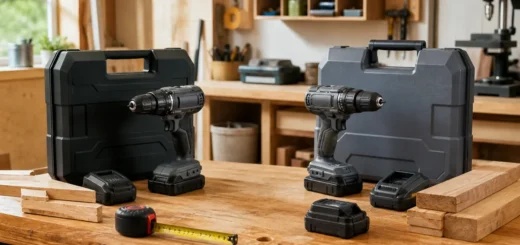
The cheapest tool is not always the lowest-cost choice, but a premium brand does not pay for itself in every workshop. For occasional drilling, assembly, or basic home repairs, a reliable entry-level cordless drill-driver kit may be enough. Compare battery compatibility and warranty coverage before paying extra for a larger bundle.
If you already own batteries in a platform, a bare tool may cost less than buying another charger and battery. That only makes sense if the batteries you have are compatible and still hold a useful charge. For frequent cutting, grinding, or other demanding work, a sturdier tool can be worth more upfront; check repair support and replacement-part availability rather than assuming a higher price guarantees durability.
For seasonal purchases, compare the actual checkout price before and during major sales. A discount can be genuine, but a bundle may include batteries you do not need. If you are buying a cordless outdoor tool for occasional use, a basic cordless string trimmer kit may be adequate; a larger battery is useful for a bigger yard but raises the total cost.
Check the checkout before accepting
Before submitting the order, review the item price, financing term, fees, selected protection plan, and delivery charge on one screen. Save a copy of the offer and its payment schedule. Confirm whether returns cancel the financing balance automatically or require you to keep paying until the retailer processes a refund.
Use this final test: if you paid the cash price today, would you still choose this exact tool and kit? If yes, and the financing total matches that price with manageable terms, the offer may be useful. If financing makes you choose a more expensive model, accept add-ons you do not need, or buy before comparing prices, step back. A low monthly payment is not savings unless the total cost and the tool’s value make sense together.