How to Budget for Tools When Building a Small Backyard Shed
What's inside
As an Amazon Associate I earn from qualifying purchases. This post may contain affiliate links at no extra cost to you.
Building a small backyard shed is usually less expensive than people expect—until tool costs start accumulating. A tape measure, drill, saw, level, fastener driver, and cutting accessories can easily add $200 to $600 to a project. The good news is that you do not need a professional contractor’s tool collection. For a typical 6-by-8-foot or 8-by-10-foot shed, a short list of reliable, appropriately sized tools is enough.
The right budget depends on whether you already own a drill, whether the lumber will be cut at the store, and whether you plan to build another structure later. Buy for the work you will actually do, not for the most demanding tool advertised on the shelf.
As an Amazon Associate we earn from qualifying purchases at no extra cost to you.


Set a Realistic Tool Budget
For a first shed, divide tools into three groups: tools you must own, tools worth renting, and tools you can skip or substitute. A sensible new-tool budget is roughly $150 to $300 if you already have a drill, or $300 to $600 if you are starting from nothing and want cordless equipment.
| Tool group | Typical cost | What it covers |
|---|---|---|
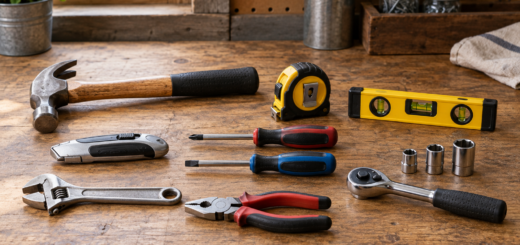
| Basic hand tools | $40–$100 | Tape measure, level, square, hammer, utility knife, chalk line |
| Entry-level power tools | $120–$250 | Drill/driver, circular saw, and one battery system |
| Better DIY setup | $250–$500 | Brushless cordless tools, extra battery, quality blades and bits |
| Rental or specialty tools | $40–$150 | Post-hole digger, nail gun, saw horses, or plate compactor |
Set aside another $30 to $75 for consumables. Drill bits get dull, saw blades wear out, and cheap driver bits can strip before the shed is finished. These small purchases are easy to overlook in the initial budget.
Buy the Essential Tools First
A 25-foot tape measure, 2-foot level, speed square, framing square, hammer, pencil, utility knife, and chalk line handle most layout work. Expect to spend $50 to $90 for usable versions. The cheapest tape measure may be fine, but a weak blade that collapses after 6 feet makes solo layout frustrating. A level that is visibly damaged or poorly made can leave doors and walls out of alignment.
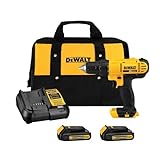
Your first power tool should usually be a cordless drill/driver. It drives structural screws, drills pilot holes, installs hinges, and handles most hardware. An 18- or 20-volt consumer platform is adequate. A kit with one battery and a charger often costs $80 to $150. Pay attention to battery cost: a cheap tool kit is less attractive if a replacement battery costs nearly as much as the original package.
For cutting framing lumber and plywood, a circular saw is more useful than a jigsaw. A basic corded saw may cost $50 to $90 and avoids battery limitations. A cordless saw is easier to use around a yard but generally costs more once you include a battery. If you choose cordless, compare cordless circular saws within the battery system you already own.
A jigsaw is not essential for a simple shed. It helps cut a window opening, roof vent, or curved trim, but those cuts can often be planned around with a circular saw and drill. Buy one only if the design includes several openings or detailed trim work.
Choose Between Budget and Premium Brands
For one shed, a budget tool can be perfectly reasonable. The main trade-offs are battery life, ergonomics, adjustment accuracy, warranty support, and durability under repeated use. A budget circular saw may cut the same board as a premium saw, but it may have a less rigid base, a shorter cord, or a motor that slows more quickly in thick material.
| Tool choice | Budget option | Midrange or premium option | Best value when |
|---|---|---|---|
| Drill/driver | $40–$90 kit | $120–$220 kit | Budget: one project; premium: frequent use |
| Circular saw | $50–$90 corded | $130–$250 cordless or upgraded corded | Corded for lowest cost; cordless for site convenience |
| Impact driver | $50–$100 | $120–$200 | Budget is fine for occasional structural screws |
| Framing nailer | $150–$250 plus compressor | $250–$500 cordless | Rent unless building multiple structures |
An impact driver is helpful when installing dozens of structural screws, but it is not mandatory. A drill/driver can do the job if you use the correct bit, moderate speed, and avoid overdriving fasteners. If you add one, compare cordless impact driver kits that share batteries with your drill.
A framing nailer is where many shed budgets go wrong. Buying a nailer, compressor, hose, and fittings can cost $250 or more, and a compressor takes storage space. For one small shed, hand-driving nails or using structural screws is slower but cheaper. Renting a nailer for a weekend makes sense if the local rental price is under about $60 and the framing layout is straightforward.
Avoid Cheap Tool Failures
The cheapest option is not always the lowest-cost option. A saw blade with too few or damaged teeth can tear plywood and force you to buy another sheet. Use a plywood or fine-tooth combination blade for sheet goods, and a framing blade for dimensional lumber. Plan on $15 to $30 for a decent replacement blade.
Stripped screw heads are another common failure. Use exterior-rated structural screws and a matching impact-rated bit. Do not substitute drywall screws; they are brittle and not designed for outdoor structural connections. Buy a multi-pack of driver bits rather than relying on the single bit included with a drill.
Cheap levels can be inaccurate enough to create problems. Check a level by placing it on a flat surface, marking the bubble position, then turning it end-for-end. If the reading changes, replace it before laying out the floor or walls. A small error at the base can become a visibly leaning wall.
Save Money With Rentals and Seasonal Buying
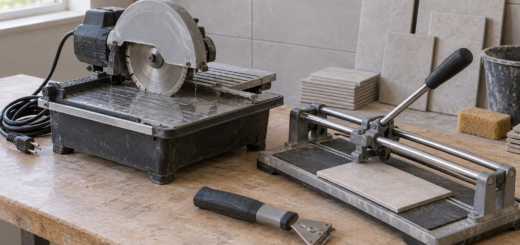
Rent tools that solve one unusual problem. A post-hole digger, plate compactor, table saw, or framing nailer is rarely worth buying for a single shed. Ask whether delivery, blades, fuel, cleaning fees, and late charges are included in the rental price.
Buy commonly used tools during seasonal sales rather than when construction is already underway. Cordless kits often receive discounts around spring home-improvement promotions, Father’s Day, and November holiday sales. Circular saws and hand tools also tend to be discounted in spring. Compare the kit contents, not just the advertised price: a kit with a small battery may be cheaper but less useful than a slightly more expensive kit with a larger battery.
Used corded tools can be excellent value because they do not depend on an aging battery. Test the trigger, inspect the power cord, and check that the blade guard moves freely. For used cordless tools, confirm that the battery charges and that replacement batteries are still available. If you expect to build shelves, a deck, or another shed later, spending more on one established battery platform can be cheaper than replacing an entire collection.
A Practical First-Shed Shopping List
Start with a tape measure, level, square, hammer, utility knife, chalk line, drill/driver, circular saw, two clamps, and quality blades and bits. Add sawhorses if you lack a safe cutting surface; a pair usually costs $30 to $70 and is safer than balancing plywood on scrap lumber.
For the lowest sensible budget, use a corded circular saw, an entry-level drill kit, hand-drive fasteners, and rent specialty tools. For a more convenient setup, choose a shared cordless platform, add an impact driver, and buy a second battery. Spend extra on accuracy, blades, bits, and safety equipment before paying for premium motor features you may never use.