Best Budget Tools for Making Simple Outdoor Planters
What's inside
As an Amazon Associate I earn from qualifying purchases. This post may contain affiliate links at no extra cost to you.
Simple outdoor planters do not require a full workshop. For most builds, the useful budget is spent on accurate measuring, clean cuts, and holes that let excess water escape. A basic planter can be made from fence boards, cedar offcuts, or treated lumber, but the right tool depends on how many planters you expect to build and whether you already own a drill or saw.
The minimum tool kit
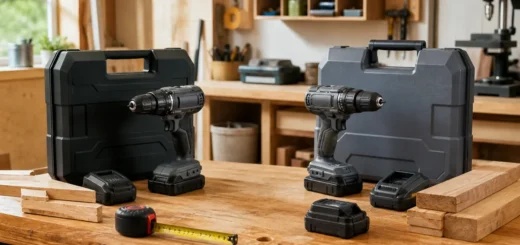
For one or two rectangular planters, start with a tape measure, pencil, combination square, drill, and saw. A cordless drill is the most useful purchase because it drills drainage holes and drives screws. An inexpensive 12-volt drill is adequate for thin boards and small screws; an 18- or 20-volt drill is a better long-term choice if you will also build shelves, trellises, or raised beds.
A basic cordless drill-driver kit commonly costs $35 to $70 at the budget end, usually including a battery and charger. The cheaper kits are fine for softwood and occasional use, but they often have smaller batteries and less durable chucks. Avoid kits that include a large assortment of poor-quality bits instead of a decent battery and charger.
For marking and assembly, a 12-foot tape measure, a 6- or 9-inch combination square, and a small level are sufficient. Expect to spend $5 to $12 on a tape, $8 to $15 on a square, and $8 to $20 on a level. A square is more important than a level for this project: it helps keep cuts and screw positions aligned, preventing a planter from becoming visibly crooked.
Choosing a saw without overspending
A handsaw is the cheapest sensible option. A quality general-purpose panel or crosscut saw costs about $10 to $25 and is perfectly capable of cutting four or five boards for a planter. It makes less noise, creates less dust, and avoids buying batteries. The trade-off is speed: cutting several thick boards can take 10 to 20 minutes, and a dull bargain saw will wander or crush the wood.
A jigsaw is useful if you want curved edges, notches, or decorative cutouts. Budget corded models typically cost $30 to $60. For simple straight cuts, however, a jigsaw is not automatically easier. Its blade can flex, leaving an angled edge, especially in 2-by lumber. Use a straightedge or clamped scrap guide and let the blade cut at its own pace.
A circular saw is the best value for repeated planter work or lumber wider than about 6 inches. Entry-level corded saws often sell for $45 to $80, while cordless versions can cost $100 or more once the battery and charger are included. The cheap option is fine when you already have a compatible battery platform. Starting a new cordless platform just for two planters usually costs more than buying a corded saw or handsaw.
| Tool | Typical budget | Best use | Where cheap is acceptable |
|---|---|---|---|
| Handsaw | $10–$25 | One or two planters, simple cuts | Fine for occasional softwood work |
| Corded jigsaw | $30–$60 | Curves, notches, light stock | Fine if cuts are guided and infrequent |
| Corded circular saw | $45–$80 | Fast, straight cuts in wider boards | Good value for several projects |
| Cordless drill | $35–$70 | Predrilling, driving screws, drainage holes | Fine for softwood and small batches |
Bits, screws, and drainage
Do not use a standard twist bit for every job. A small set of brad-point or wood bits makes cleaner holes in planter boards. Use a 1/8-inch bit for pilot holes in softwood, 3/32 inch for small screws, and a 1/4- to 3/8-inch bit for drainage holes. A brad-point wood bit set costing $10 to $20 is enough for typical planter construction.
Make at least four drainage holes in the bottom of a planter up to 24 inches long. For a longer box, use six or more holes, spaced roughly 4 to 6 inches apart. Without drainage, soil stays saturated, roots decay, and freeze-thaw cycles can split the bottom. Landscape fabric over the holes keeps soil from washing out; do not seal the holes with caulk.
Use exterior-rated screws, preferably coated construction screws or stainless steel. One-and-a-quarter-inch screws work for 3/4-inch boards; 2-inch screws are more suitable for thicker stock. Predrilling reduces splitting, particularly near board ends. A cheap screw can rust within one season and leave black stains on the wood, so fasteners are a poor place to cut costs.
Small tools that prevent expensive mistakes
Two small bar clamps usually cost $15 to $30 and are worth buying if you are working alone. They hold sides flush while you drill, which prevents gaps and reduces the chance of driving a screw at an angle. If the planter is only 12 inches wide, 6- or 12-inch clamps are sufficient. Cheap plastic clamps work for light pressure, but their jaws can slip; basic steel bar clamps are a better value.
Sandpaper is more useful than a powered sander for this project. Buy 80-grit paper for splintered edges and 120-grit for final smoothing. A $5 sanding block or a scrap of wood wrapped in paper gives better control than sanding loose paper by hand. A random-orbit sander costing $35 to $60 saves time when preparing multiple planters, but it is unnecessary for one small box.
For outdoor durability, add a water-based exterior wood sealer or outdoor stain. Cedar can be left unfinished and will gray; inexpensive pine benefits from sealing all faces, especially end grain. Do not coat the inside with a product unless its label approves contact with garden soil. A plastic nursery pot placed inside the wooden box is often the simplest way to protect the wood and make watering less risky.
When seasonal buying saves money
Tool prices often improve around spring sales, Memorial Day, July promotions, and late November clearance events. Spring has the widest selection of gardening and outdoor-finishing products, while fall can bring better prices on corded tools and leftover sealers. Batteries and combo kits are frequently discounted more heavily than bare tools, but only buy into a battery platform if you expect to use several tools from it.
For a single planter, the lowest-cost route is usually a handsaw, a budget drill, a wood-bit set, exterior screws, and sandpaper—roughly $70 to $130 if you own no tools. If you already have a drill, spend the savings on a square, clamps, and corrosion-resistant screws. Those small upgrades do more for the finished planter than a premium saw.