Refurbished Power Tools: When They Are a Bargain and When They Are a Trap
Our Top Picks
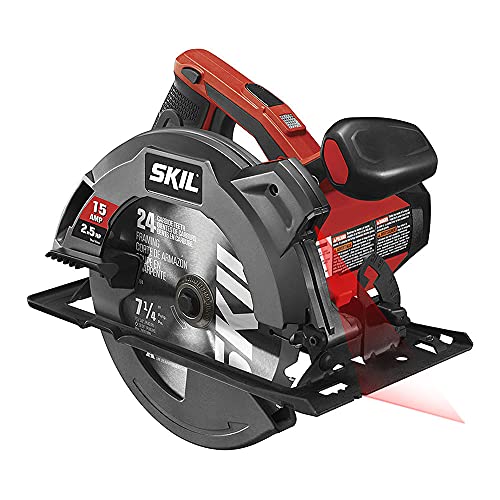 SKIL 15 Amp 7-1/4 Inch Circular Saw with7-1/4 Inch (Pack of 1)14.2 x 9.8 x 8.5 inches8.7 poundsCheck on Amazon
 SKIL 10" Dual Bevel Sliding Compound Miter Saw-MS6305-0010''35.43 x 22.44 x 14.17 Inches39.4 poundsCheck on Amazon
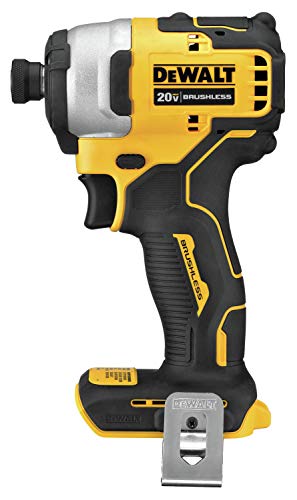
 DEWALT 20V MAX Cordless Drill and Impact DriverOne Size15.06 x 6.4 x 9.88 inches3.6 PoundsCheck on Amazon


What's inside
- Factory refurbished: usually a good buy
- Third-party refurbished: read carefully
- Weighing the discount against the risk
- Categories that refurb well
- Categories to avoid
- What to check on arrival
- Where refurb is smartest
- Who it suits, and who should skip it
- Mistakes that turn a bargain into a trap
- FAQ
- Related Guides
- Factory refurbished: usually a good buy
- Third-party refurbished: read carefully
- Weighing the discount against the risk
- Categories that refurb well
- Categories to avoid
- What to check on arrival
- Where refurb is smartest
- Who it suits, and who should skip it
- Mistakes that turn a bargain into a trap
- FAQ
- Related Guides
As an Amazon Associate I earn from qualifying purchases. This post may contain affiliate links at no extra cost to you.
“Refurbished” covers two completely different things. One is a manufacturer taking back a tool, replacing worn parts, retesting it and issuing a warranty. The other is somebody wiping down a returned item and reboxing it.
Both get sold under the same word, often at similar-looking discounts, and the listing rarely tells you which one you are holding. That is the whole difficulty with refurbished power tools: the savings are real, the risk is real, and separating them takes about two minutes of reading before you click buy.
As an Amazon Associate we earn from qualifying purchases at no extra cost to you.




One rule covers most of it. A refurb is worth buying when you can name, from the listing itself, who will repair it if it fails and for how long. If you cannot name them, you are not buying a refurbished tool. You are buying a used tool with a better word attached, and it should be priced like one.
Factory refurbished: usually a good buy
Manufacturer or authorised refurb programmes typically test to the same standard as new, replace consumable parts, and provide a warranty — often one year rather than the full three, but a real warranty from the manufacturer.
Discounts are commonly 25–40% off new. On expensive tools that is meaningful money.
It helps to know what you are accepting in exchange. Most units in these programmes are open-box returns, retail display stock, overstock repacks, or tools that arrived with one faulty component and were repaired. None of that history shortens the service life of a unit that has since been retested. What you give up is cosmetics and packaging: expect scuffs, a plain box, and accessories that may be substituted or missing.
The signals that you are looking at the genuine article are consistent. The brand’s own wording — certified, factory reconditioned — sits alongside a stated warranty term, with the manufacturer named as the party honouring it, and the seller is the brand or one of its authorised outlets. The serial plate should be intact, because service centres decline warranty work on tools with a removed or defaced serial number.
Factory refurbished tools
Check that the listing states a manufacturer warranty and who honours it. If neither is stated, treat it as used.
Third-party refurbished: read carefully
Some independent refurbishers are excellent, most are not. The questions worth asking: who performed the refurbishment, what was tested or replaced, what warranty applies and who honours it, and what the return window is.
If any answer is vague, the price advantage is not worth the risk.
Vagueness has a house style worth recognising. “Tested and working” describes a power-on check, not a refurbishment. “Professionally inspected” names neither the standard nor the inspector. “Grade A” is usually a comment on the housing rather than the motor. The good independent shops read differently: they list what was replaced, state their warranty in months, tell you what is missing from the box, and photograph the actual unit instead of using a stock image.
Weigh who carries the cost of failure, too. A 90-day seller warranty on a corded sander is acceptable, because a badly refurbished tool usually fails early and return shipping is cheap. The same warranty on a heavy stationary machine is close to worthless, since freight in one direction can swallow the whole saving. The heavier the tool, the harder you should push for a warranty the manufacturer’s service network will honour.
Weighing the discount against the risk
Four things decide whether a refurb listing is a bargain, and they matter in this order:
- Who honours the warranty. Manufacturer, authorised outlet, or anonymous seller — this one answer moves the risk more than the price does.
- How long it runs. A year is comfortable. Ninety days is a test window. Thirty days is a returns policy wearing a costume.
- The real discount. Measure against what the tool sells for new during a promotional window, not against list price. A refurb that only beats MSRP is not a deal.
- The cost of the worst case. Return freight, parts availability, and whether a dead unit stalls a project or merely postpones it.
Run them in that order and most listings sort themselves. A factory refurb at a third off with a one-year manufacturer warranty clears all four. An unnamed refurb at 15% off list, 30-day guarantee, on a tool that hits the same price new twice a year, fails all four — quietly, because the number still looks like a discount.
Categories that refurb well
Wear is what you are buying blind, so the best candidates are tools with little of it, and tools whose faults show up in the first ten minutes rather than in eighteen months.
- ✔ Corded tools — fewer wear items, simpler to test
- ✔ Bare tools where you already own batteries
- ✔ Large stationary machines from reputable sellers
- ✔ Vacuums, lights, inflators — low-stress items
Corded tools lead because there is no battery hiding the history, and their usual failure points — bearings, brushes, switch, cord — are all things you can hear or test on the bench immediately. Bare tools are the other easy win: the expensive, uncertain component stays out of the transaction because you already own the packs.
Categories to avoid
The mirror image: anything where the wear is invisible, or where one failed part costs more than the discount saved you.
- ✘ Batteries — cycle history is invisible and matters most
- ✘ Anything with a lithium pack included, unless factory-certified
- ✘ Tools where a failed part is expensive (press tools, plasma cutters)
- ✘ Safety-critical items where certification matters
Batteries deserve that emphasis. Remaining pack life depends on cycle count, depth of discharge, heat exposure and storage charge, none of which is printed on the case. A tired pack can read full voltage at rest, sag badly under load, and still be described accurately as working. When a kit’s discount looks unusually generous, the battery risk is often what has been priced in, and you are carrying it.
What to check on arrival
Your leverage is highest in the first week. Do this before the tool joins the pile and before the return window closes on its own.
- ✔ Run it for several minutes and listen for bearing noise
- ✔ Check the chuck or blade mount for runout and play
- ✔ Look for cosmetic damage that suggests a drop
- ✔ Test every speed, mode and switch
- ✔ Confirm the warranty is registered in your name if required
Keep the box and packing material until that window has passed, since original packaging is often the difference between a full refund and a partial one. Photograph any cosmetic damage the day it arrives.
Where refurb is smartest
Expensive tools you will use occasionally. A refurbished miter saw or router at 35% off is a very good deal; a refurbished drill at 20% off is barely worth the paperwork when combo kits go on sale regularly.
That splits into three bands. At the low two-figure end the discount is a few dollars and any problem costs you shipping and an afternoon, so buy new. In the middle, where most cordless kits and mid-size saws sit, refurb only wins when it clearly beats the promotional price of a new one. At the top end the arithmetic flips: a third off a stationary machine, a large sliding saw or a heavy rotary hammer is real money, these tools are mechanically simpler than their price suggests, and they spend most of their lives sitting still.
Refurbished stationary tools
The dollar saving scales with price, so refurb makes most sense on the expensive end of your list.
Who it suits, and who should skip it
Refurb works best for someone buying above their own frequency of use — the hobbyist who wants a better machine than a weekend schedule justifies — and for anyone already committed to a battery platform who needs a bare tool to fill a gap.
Skip it if the tool earns your living on Monday, if you have no time or space to bench-test a delivery, or if it would be your first tool on a new platform, since you have no baseline for what normal sounds like. Skip it wherever a failure is a safety issue rather than an inconvenience.
Mistakes that turn a bargain into a trap
- Comparing the refurb price to MSRP instead of the current sale price of a new unit.
- Assuming “refurbished by” and “sold by” are the same company. The warranty follows the refurbisher.
- Letting the return window lapse before running the tool under load, the only test that finds bearing and thermal faults.
- Buying a refurbished kit for the discount, then finding the packs are the oldest part of the deal.
FAQ
Do refurbs come with accessories? Often not, or with generic replacements. Check the listed contents.
Is the warranty shorter? Usually — one year is typical against three for new.
Can I return them? Depends entirely on the seller. Confirm the window before buying.
Is refurbished the same as open-box? No. Open-box means returned and resold, with no promise anyone tested or repaired it. A real refurbishment adds testing, replaced consumables and a warranty, which is why it should cost more than open-box and less than new.
See refurbished listings →