Best Budget Router for DIY Woodworking Without Overspending
What's inside
As an Amazon Associate I earn from qualifying purchases. This post may contain affiliate links at no extra cost to you.
A budget router can handle roundovers, chamfers, hinge mortises and simple grooves without the cost or weight of a professional plunge setup. For most DIY woodworking, the best value is a corded, variable-speed trim router with a 1/4-inch collet. It is compact, widely compatible with inexpensive bits and capable of the edge work that fills many home-shop projects.
As an Amazon Associate we earn from qualifying purchases at no extra cost to you.



What to buy for a small shop
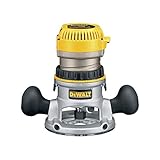
Look for a 1 to 1-1/4 horsepower-class trim router, variable speed, a clear base and a standard 1/4-inch collet. That combination keeps the tool manageable for one-handed edge routing while providing enough power for common bits up to about 1 inch in diameter. A soft-start feature is useful: it reduces the sudden twist when the motor starts, especially with a large bit.
For a first router, a corded variable-speed trim router is usually a better buy than the cheapest fixed-speed model. Speed control helps match the bit to the work and can reduce burning. A corded tool also avoids spending extra on batteries and a charger. If you already own a battery platform and mainly do short edge-routing jobs, a cordless trim router can make sense, but compare the bare-tool price with a corded kit before paying for convenience.
Where the budget goes
| Router type | Typical value | Best use | Main trade-off |
|---|---|---|---|
| Fixed-speed trim router | Lowest purchase price | Occasional small roundovers and chamfers | Less control over speed and bit choice |
| Variable-speed trim router | Best balance for most DIY users | Edge profiles, light grooves and template work | Limited depth control compared with a plunge base |
| Compact router kit with plunge base | More cost, broader capability | Stopped cuts, shallow mortises and repeatable depth changes | More pieces to store; plunge bases vary in quality |
| Full-size fixed/plunge router | Higher cost and weight | Large bits, deep cuts and router-table work | Overkill for many small-shop tasks |
Prices shift with sales, but compare the included bases, edge guide and case—not just the number on the shelf. A kit that costs a little more but includes a useful plunge base may beat buying an add-on later. Conversely, do not pay for a full-size router if your actual jobs are trimming laminate and rounding table edges.
Know the limits before you cut
A trim router is not a small substitute for every full-size router job. Its 1/4-inch shank limits bit choice, and the compact base can be unstable on narrow stock. Avoid large-diameter panel-raising bits, deep cuts in hardwood and long sessions in thick material. Those jobs need more power, a larger collet and a stable router table or full-size machine.
Even on a small router, take multiple passes. For a 1/4-inch-deep groove in oak, remove roughly 1/8 inch per pass rather than forcing the full depth at once. On edge profiles, start with a shallow pass and finish at the intended depth. Pushing too hard can bog the motor, leave burn marks, pull the router off line or snap a bit. If the cut sounds strained or the router slows noticeably, reduce the depth of cut and feed more steadily.
Burning is not always a power problem. A dull bit, slow feed, excessive speed or packed sawdust can scorch wood. Make a test cut on scrap of the same species, then adjust speed and feed. Keep the base flat against the work and clamp the work securely; a narrow board that tips under the router can ruin both the edge and the cut.
Spend on useful accessories, not extras
A fixed base is enough for most edge work. If you want to cut grooves or mortises, consider a compact router kit with fixed and plunge bases. A plunge base makes it easier to lower a bit into a workpiece and set repeatable depths, but it does not turn a trim router into a production mortising machine.
Check that the router accepts common guide bushings or has a compatible edge guide if you plan to follow templates. Also budget for a small set of sharp, reputable 1/4-inch-shank bits. A few straight bits and a 1/4-inch roundover bit are more useful at first than a large assortment of inexpensive profiles. Poorly ground bits can vibrate, burn and leave a rough edge, so replace damaged cutters rather than trying to compensate with slower cuts.
When to buy—and when the cheapest is fine
Sales around major holiday periods and seasonal home-improvement events often bring router kits down in price. Compare the same configuration across retailers: a lower price on a bare tool may be a poor deal if you need to buy a base, guide and case separately. If you already own a compatible battery and charger, a cordless bare tool can be good value; otherwise, the battery bundle may erase its convenience advantage.
The cheapest fixed-speed trim router is reasonable if you expect only occasional, shallow edge work and it has a secure base, a cleanly operating switch and a collet that grips properly. Step up to variable speed if you will use different bit sizes, work with both softwood and hardwood, or want room to grow into template routing. Pay more for a plunge base only when you have jobs that need plunging or repeatable depth settings. For most first-time DIY buyers, that is the practical ceiling: a dependable variable-speed trim router, a few good bits and enough restraint to take light passes.