Best Value Drill Press for a Small Home Workshop
What's inside
As an Amazon Associate I earn from qualifying purchases. This post may contain affiliate links at no extra cost to you.
A drill press earns its space when you need repeatable holes, controlled depth, or a bit held square to a workpiece. For a small home workshop, the best value is usually a modest benchtop model—not the largest machine you can afford. A 10- or 12-inch press with a ½-inch chuck handles common woodworking and light metalworking without taking up much floor space.
As an Amazon Associate we earn from qualifying purchases at no extra cost to you.
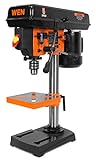

What value means in a small shop
Don’t judge a press by horsepower claims alone. Useful value comes from a stable table, a spindle that runs true, enough speed choices for your materials, and controls that are easy to reach. A cheap press that wanders or vibrates can waste stock and make accurate work frustrating. On the other hand, paying extra for a heavy floor model rarely makes sense if you drill occasional holes in boards and small metal parts.
Before shopping, measure the space under your bench and the distance from the wall. Allow room to raise the table, open the belt cover, and swing long workpieces around the column. A benchtop press still needs a solid bench: bolt it down or clamp it securely. A loose machine can shift under load.
The best-value category
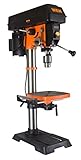
For most small shops, start with a 10-inch benchtop drill press if your work is mostly wood, plastics, and occasional light metal. It is compact and typically has enough throat depth for smaller parts. Choose a 12-inch press if you often drill holes farther from an edge; the larger swing can be more useful than a small increase in motor power.
Check the advertised swing carefully. A “10-inch” press generally has a 5-inch distance from the spindle center to the column, so the largest workpiece it can reach across is about 10 inches in diameter. That does not mean it can drill a 10-inch hole. Chuck capacity is another separate measurement: a ½-inch chuck accepts shanks up to ½ inch, but the motor and machine may not be suited to drilling large holes in steel.
A compact press with a ⅝-inch chuck can be sufficient for small drill bits and woodworking. If you expect to use Forstner bits, larger twist bits, or accessories with thicker shanks, a ½-inch chuck gives you more flexibility. For routine furniture repairs, pilot holes, and small brackets, the smaller chuck is fine.
Compare the practical options
| Type | Best for | Advantages | Trade-offs |
|---|---|---|---|
| 8-inch benchtop | Small parts and occasional holes | Lowest cost, compact footprint | Limited reach; fewer useful adjustments on basic models |
| 10- or 12-inch benchtop | General home-shop work | Good balance of reach, price, and size | Needs a rigid bench; table and quill quality vary |
| Floor model | Large stock or frequent use | More reach and often a larger work area | Costs more, takes floor space, can be excessive for light work |
| Drill guide or hand drill | Infrequent holes in portable work | Cheap and easy to store | Less repeatable; harder to control depth and square alignment |
Features worth paying for
Look for a table that tilts and locks without slipping, a depth stop with clear adjustment, and a quill with little side play. Lower the quill and gently test for movement; noticeable wobble can show up as oversized holes or chatter. If possible, check spindle runout with a dial indicator, but many buyers can simply test the machine with a straight, known-good bit and watch for visible wobble.
Variable speed is convenient, but a belt-driven press with several pulley settings is often better value. Changing belts takes a few minutes, and the machine may offer more usable torque at low speeds. For small twist bits in wood, around 1,500–3,000 rpm is common. Larger bits and metal generally need slower speeds. A 1-inch bit in steel may call for roughly 250–400 rpm, depending on the material and bit; use cutting fluid and consult the bit maker’s speed guidance.
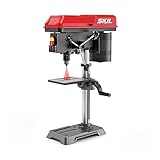
Don’t buy based on a laser alone. A laser can help locate a mark, but it does not guarantee that the spindle is square to the table or that the bit is centered. A fence, vise, and sacrificial board are often more useful accessories. Budget for eye protection and clamps, too: never hold a small metal part by hand while drilling.
Brand and price: where to save
Prices change with sales, so compare the machine’s actual features and return policy rather than trusting a permanent “list price.” Established brands may have better parts availability, but the badge does not guarantee precision. A lower-cost press can be a sensible buy for weekend projects if its table locks firmly and its spindle runs acceptably true. A 12-inch benchtop drill press is worth the premium mainly when you will use its extra reach.
For a sturdier setup or more frequent use, compare heavy-duty benchtop presses with ½-inch chucks. Pay attention to return shipping and warranty coverage; a bargain machine is less attractive if a defect means expensive freight. If the press will see only a few holes each month, a portable drill guide for a hand drill may be the cheaper, more space-conscious answer.
A sensible buying checklist
Compare reach, chuck capacity, speed range, table size, depth-stop design, and available replacement belts or chucks. Read recent owner feedback for repeated complaints about loose tables, difficult belt changes, or excessive runout—not isolated shipping damage. If you can inspect one in person, lower the quill, lock the table, and check for movement before deciding.
Seasonal sales can make a midrange benchtop model cost close to a basic one. Watch for discounts around major holiday promotions and spring tool events, but compare the final price with shipping and included accessories. Avoid buying a larger press just because it is on sale: if it crowds the bench, the extra capacity has no practical value.
After setup, square the table to the spindle with a reliable square, then test a hole in scrap. Clamp the work, use a backing board to reduce tear-out, and feed steadily rather than forcing the bit. If the motor slows sharply, the bit smokes, or the work chatters, stop and check the speed, sharpness, and clamping. Those habits often improve results more than spending another tier on the machine.