Best Budget Airless Sprayer for Exterior Fence Painting
What's inside
As an Amazon Associate I earn from qualifying purchases. This post may contain affiliate links at no extra cost to you.
For a one-time fence job, a budget airless sprayer can save hours of brushing and rolling—but the cheapest unit is not automatically the best buy. Fence boards have gaps, rough grain, and edges that waste paint through overspray. The right choice is usually a small electric airless sprayer with enough capacity for your fence and coating, plus a tip suited to exterior stain or paint.
As an Amazon Associate we earn from qualifying purchases at no extra cost to you.

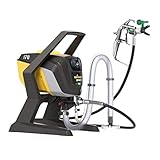


Best value for most fence jobs
Look for a homeowner-grade electric airless sprayer sold as a complete kit, with a reversible spray tip, inlet hose, and at least 25 feet of hose. A budget electric airless sprayer is generally a sensible fit for roughly 100 to 300 feet of average-height fencing, depending on the coating and how many sides you are painting.
Check the manual for the maximum supported tip size, not just the advertised gallons per minute. Many entry-level machines are intended for smaller tips and thinner coatings. Thick exterior latex may need straining, careful thinning if the paint maker permits it, or a more capable sprayer. A unit that cannot keep up with the chosen tip can leave uneven coverage and tempt you to move too slowly, causing runs.
Compare the practical options
| Option | Best for | Main trade-off | Typical value |
|---|---|---|---|
| Budget electric airless | One or two fences; occasional exterior work | Less forgiving with thick coatings; slower on large jobs | Low upfront cost, provided the kit includes a usable tip and hose |
| Higher-capacity homeowner airless | Long fences, multiple projects, thicker paint | Costs more and still needs thorough cleanup | Worthwhile when it avoids struggling with material flow |
| Rental airless unit | A large fence you can finish in a day or two | Rental, deposit, and cleaning deadlines add cost and pressure | Often better than buying if use is truly one-time |
| Brush and roller | Short fence, small repairs, tight surroundings | Much more labor; better control around plants and buildings | Lowest equipment cost and no overspray |
Prices change with sales and season, so compare the total kit rather than a headline price. A sprayer missing a suitable tip, inlet filter, or enough hose may require add-ons. Also check that replacement tips and filters are easy to find; an inexpensive machine is poor value if a worn tip is difficult to replace.
Match the sprayer to the coating
For transparent or semi-transparent fence stain, a basic airless unit is often adequate. Stain is commonly easier to move through a small sprayer than heavy paint, but check the product label: some stains are not intended for spraying, and some require back-brushing. A compatible airless sprayer tip for fence stain should produce a fan wide enough to cover boards without flooding the gaps. Tip codes differ by manufacturer, so follow the sprayer and coating instructions rather than buying by number alone.
Exterior latex paint is a harder test. Confirm the sprayer is rated for the paint and tip size you intend to use. Strain the paint if the label or sprayer manual calls for it; dried flakes can clog the tip. Do not thin paint unless the paint maker allows it, because excessive thinning can reduce hide and durability. If the machine pulses, spits, or cannot maintain an even fan, stop and check the tip, filter, intake, and material compatibility instead of trying to compensate with a slower pass.
Estimate material before buying
Measure the fence length and height, then account for both sides if they need coating. A 100-foot fence that is 6 feet high has 1,200 square feet across two sides before counting edges and rails. The coating label’s coverage estimate is a starting point, not a promise: rough, dry wood can soak up more, and spray drift wastes material. Buy enough for the label’s recommended coats, with some allowance for texture and touch-ups.
Plan on testing the fan on scrap wood or a hidden section. Hold the gun about 10 to 12 inches from the surface if the sprayer instructions permit, keep it square to the boards, and overlap each pass by about half the fan width. Start moving before pulling the trigger and release it at the end of the pass. This reduces heavy spots at board ends. Back-brushing stain into rough grain can improve penetration, but it adds labor; check the coating maker’s directions.
Control overspray and avoid rework
Airless sprayers move coating quickly, and wind can carry it onto siding, cars, neighboring property, or leaves. Pick a calm day, mask nearby surfaces, cover plants, and place a test sheet behind the fence to see where the spray is going. A narrow fan and careful distance reduce waste, but do not expect a budget sprayer to eliminate drift. If you cannot protect the surroundings, brush and roll instead.
Scrape loose finish, replace damaged boards, and let wet wood dry before coating. Spraying over dirt or peeling paint does not fix the surface; it can seal in a problem and leave a short-lived finish. Keep the gun moving and watch for runs on knots, board edges, and horizontal rails. Pause to wipe a drip before it dries, and avoid loading the gaps so heavily that coating runs out the other side.
When the cheaper option is enough
Choose a basic unit if the fence is modest in size, you have compatible stain or paint, and you expect to use the sprayer only occasionally. The savings matter most when the included hose and tip fit the job and replacement parts are available. A replacement-tip and filter set for your sprayer can help keep a low-cost machine usable, but verify exact compatibility before ordering.
Pay more—or rent—when you have several hundred feet of fence, thick exterior paint, or repeated projects ahead. A larger unit can maintain flow with a suitable tip and reduce stop-start frustration, but it does not remove the need for masking, setup, or cleanup. For a short run, a brush and roller may cost less overall and give you better control.
Count cleanup in the real cost
Cleanup is part of the job, not an optional extra. Follow the manual for the coating you used: water-based products generally require water flushing, while other coatings may require a specified solvent. Relieve pressure before removing the tip, never point the gun at a hand, and use the manufacturer’s pressure-relief procedure. Dried coating in the gun or hose can ruin an otherwise serviceable sprayer. If you are unlikely to clean it promptly and correctly, renting or brushing may be the better budget decision.