Best Affordable Hand Tool Set for a First Apartment Maintenance Kit
What's inside
As an Amazon Associate I earn from qualifying purchases. This post may contain affiliate links at no extra cost to you.
A first apartment does not need a 200-piece tool kit. Most renters need a compact set for assembling furniture, tightening loose hardware, hanging light items, opening stuck battery compartments, and handling minor repairs before calling the landlord. A sensible starter kit costs about $35 to $80. Spending more can improve the handles, case, and ratchet, but a larger piece count often adds duplicate bits and tools you will rarely use.
As an Amazon Associate we earn from qualifying purchases at no extra cost to you.



What to buy first
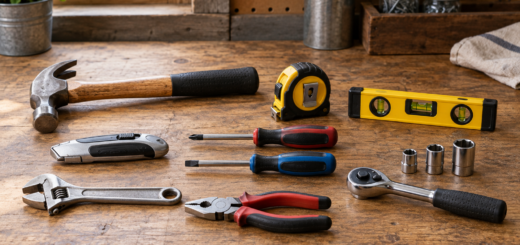
The most useful core is a claw hammer, tape measure, adjustable wrench, slip-joint pliers, utility knife, level, screwdrivers, hex keys, and a bit driver with common bits. A 12- to 16-ounce hammer is easier to control indoors than a heavy framing hammer. Look for a tape measure at least 16 feet long with a blade that stays extended 6 feet or more; shorter, flimsy blades are frustrating when measuring rooms or furniture.
For screwdrivers, a #2 Phillips and medium flathead handle most household screws, but a multi-bit driver saves space. Choose a driver with a magnetic bit holder and bits labeled PH1, PH2, PH3, slotted, Torx, and hex. Furniture hardware frequently uses 4mm, 5mm, and 6mm hex sizes, so a small set of L-shaped metric hex keys is worth having even if a furniture box includes one.
A 6- or 8-inch adjustable wrench covers many nuts, while tongue-and-groove or slip-joint pliers handle awkward shapes. Do not use adjustable pliers as a substitute for a wrench on polished plumbing fittings: the teeth can leave permanent marks. Add a utility knife with replaceable blades, rather than a cheap snap knife that flexes under pressure.
Best budget kit options
| Kit type | Typical price | What it does well | Main compromise |
|---|---|---|---|
| Basic 30- to 50-piece set | $25–$45 | Furniture assembly, small adjustments, hanging light items | Soft bits, thin pliers, weak case |
| 60- to 100-piece homeowner set | $45–$80 | Better variety, stronger ratchet and handles | Many duplicate or low-use pieces |
| Build-your-own compact kit | $50–$100 | Higher quality on the tools you actually use | No convenient matched case; costs more upfront |
| Premium compact brand set | $90–$150 | Better fit, storage, and long-term durability | Overkill for occasional apartment work |
For most first apartments, the best value is a 60- to 100-piece homeowner set from a mainstream tool brand, provided it includes the core tools rather than padding the count with nails, cable ties, and tiny precision bits. A 100-piece set is not automatically better than a 40-piece set. Count the useful tools, not every bit and fastener in the package.
If your budget is tight, a basic home tool kit with hammer, screwdrivers, pliers, and tape measure is fine. The cheaper option usually works for assembling a bookshelf or tightening cabinet pulls. Its failure modes are predictable: screwdriver tips round off, the tape lock slips, and pliers may have rough jaws or noticeable handle flex. Those problems matter if you apply high force, but not for occasional light-duty work.
Brand value and quality
At the budget end, brands such as Hart, Hyper Tough, Amazon Basics, Workpro, and similar house or value brands can be reasonable for renters. Inspect the set before keeping it. The screwdriver tip should be centered and sharply formed, the hammer head should be tight on the handle, and the plier jaws should meet without a large gap. Return a set with loose joints or stripped-looking bits immediately.
Midrange sets from Craftsman, Stanley, Husky, Kobalt, and comparable established brands generally offer better handle comfort, stronger chrome finishes, and more consistent bit fit. That does not make every tool dramatically tougher. The main benefit is less annoyance: the ratchet selector works cleanly, the case closes, and the tools are easier to replace or warranty.
Do not pay a premium simply for a lifetime warranty. A warranty may replace a broken wrench, but it will not make a poorly fitting Phillips bit drive a stubborn screw. For apartment maintenance, fit and storage are usually more valuable than extreme impact strength. A compact ratcheting screwdriver bit set is often a better upgrade than buying a bigger general-purpose kit.
What not to use or skip
Skip sets advertised with 200 or more pieces unless you have checked the contents carefully. They commonly inflate the count with 40 driver bits, duplicate screwdrivers, tiny sockets, and disposable fasteners. Those kits can be useful as a cheap parts supply, but they are poor value if you expect a solid wrench, pliers, or hammer.
Do not use a screwdriver as a pry bar or chisel. The tip can snap and send fragments toward your face. Do not hammer directly on an adjustable wrench, and do not use a utility knife without cutting away from your body and securing the material. For wall hanging, confirm your lease rules first. A basic stud finder and level kit helps, but it does not replace checking for electrical or plumbing hazards before drilling.
When to buy and how to save
Tool sets are often discounted around Father’s Day, July 4th, Black Friday, Cyber Monday, and the weeks before Christmas. Back-to-school promotions can also reduce prices on compact kits because they are marketed for dorms and first apartments. Compare the actual contents and recent price, not the claimed percentage discount. A $60 set marked down from $100 is not a bargain if similar kits normally sell for $45.
Prices also drop when brands refresh packaging or add a new case. That is a good time to buy last-generation sets, since basic hand tools change slowly. Used tools from estate sales and local marketplaces can be excellent for hammers, wrenches, and pliers, but inspect for rust, bent jaws, cracked handles, and rounded edges. Buy new driver bits and utility-knife blades; worn bits are cheap and can damage screw heads.
A practical shopping list
Target a kit containing a 12- to 16-ounce hammer, 16-foot tape measure, six- or eight-inch adjustable wrench, slip-joint pliers, utility knife, level, multi-bit screwdriver, metric and SAE hex keys, and at least 20 common driver bits. Add a small flashlight, safety glasses, painter’s tape, and spare utility blades separately. That combination handles the majority of first-apartment tasks without filling a drawer with tools you will not use.
If the kit is under $40 and passes a basic inspection, it is a defensible purchase for light use. Move up to the $60–$80 range if you assemble furniture regularly, maintain an older apartment, or want tools that will survive several moves. Beyond that, spend on individual upgrades only after a specific tool has failed—not because the package advertises a larger number.