
What's inside
As an Amazon Associate I earn from qualifying purchases. This post may contain affiliate links at no extra cost to you.
Our Top Picks
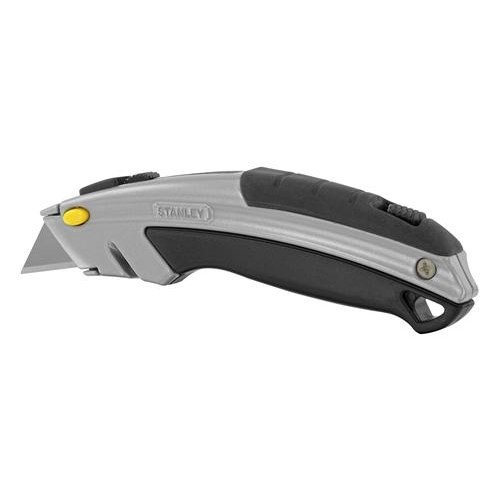
 Stanley 10-778 Fatmax Retractable Knife8.5"L x 3"W x 1.1"H8.5 x 9.7 x 1.1 inches0.4 poundsCheck on Amazon


What matters for flooring and drywall
A utility knife for flooring and drywall needs two things: a blade that stays secure under pressure and a way to replace it without wasting time. Beyond that, the right choice depends on how often you work and what you cut. A homeowner trimming drywall for one room doesn’t need the same knife as a flooring installer making hundreds of cuts a day.
For drywall, the knife scores paper and trims edges; it should feel controlled, not bulky. For vinyl flooring, carpet, and underlayment, a sharp blade and a firm grip matter more, especially when cutting against a straightedge. Don’t use a utility knife to force cuts through thick material in one pass. Several shallow passes are safer and less likely to pull the material off line.
As an Amazon Associate we earn from qualifying purchases at no extra cost to you.


Which knife style is worth buying?
A basic fixed-blade folding knife is usually the best value for occasional work. It has fewer moving parts than a retractable knife and generally costs less. Its main drawback is that the blade stays exposed when open, so you need to close it promptly and store it securely.
A retractable knife lets you expose only as much blade as needed, which can be useful for scoring drywall or cutting carpet backing. The mechanism adds parts that can clog with dust or wear, though. For regular flooring work, a sturdy retractable model with a positive blade lock is a sensible middle ground. Avoid flimsy sliders that let the blade shift when you press into material.
For a weekend project, a basic folding utility knife is often enough. If you cut for work or want adjustable blade exposure, compare it with a heavy-duty retractable utility knife.
Compare the main options
| Type | Typical price range | Best for | Trade-off |
|---|---|---|---|
| Basic folding knife | $5–$12 | Occasional drywall and light flooring cuts | Blade is exposed when open; basic grips may be uncomfortable in long sessions |
| Heavy-duty retractable knife | $10–$25 | Frequent scoring, trimming, and general jobsite use | Slider and lock can collect dust or wear; inspect for blade movement |
| Specialty flooring knife | $12–$30 | Repeated carpet or resilient-flooring cuts | Shape may be less convenient for drywall and general household tasks |
| Bulk pack of basic knives | $10–$25 | Shared work areas or projects where tools get misplaced | Quality varies; some handles and locks are poor fits for hard use |
Prices are broad U.S. retail ranges, not quotes; sales and pack sizes change them. A $15 knife is not automatically a better buy than a $7 one. Check whether the price includes spare blades and whether replacements are a common standard shape. Proprietary blades can turn a low-cost handle into an expensive habit.
Budget for blades, not just the handle
Blunt blades are the most common reason a cheap utility knife makes a job harder. A dull edge needs more force, can wander off a straightedge, and may tear drywall paper instead of scoring it cleanly. On flooring, it can drag and leave a ragged edge. Change blades as soon as you need noticeably more pressure or the cut starts tearing.
Standard trapezoid blades are inexpensive and widely available. A small pack commonly costs a few dollars; larger bulk packs reduce the cost per blade if you use them regularly. A knife with a built-in blade storage compartment is convenient, but keep used blades separate and dispose of them in a puncture-resistant container—not loose in a pocket or rubbish bag. For a one-room project, buying a modest pack is usually better value than paying extra for an elaborate handle.
Features worth paying for
Look for a lock that holds the blade firmly, a grip that stays secure with dusty hands, and a blade change you can complete without fiddling. If you can, test the knife in a shop: open and close it, check the lock, and see whether the handle feels pinched in your hand. A rubberized section is useful only if it improves control; it is not a substitute for a secure blade mechanism.
For drywall work, a knife that fits comfortably in a pocket or tool pouch is handy because it is used repeatedly for scoring, trimming, and opening packaging. For flooring, prioritize grip and a robust lock over extra features. A dedicated flooring utility knife can suit carpet or vinyl installation, but it is not necessary for occasional cuts if your general-purpose knife is solid.
When to spend more—and when not to
Choose a basic folding knife if you have one small drywall repair or a short run of underlayment to trim. Spend more on a durable retractable model if you use a knife weekly, share it with coworkers, or routinely cut tough material. A comfortable handle can pay off during a full day of work; the same upgrade is hard to justify for a few cuts a year.
Buy replacement blades alongside the knife so a dull edge does not slow the job. Seasonal promotions around spring renovation season and major holiday sales can reduce tool prices, but compare the blade count and knife type rather than judging by the discount label. A multi-pack is worthwhile when you need spare knives or blades; otherwise, an inexpensive single knife and a small pack of standard blades are often the better-value setup.
Use it safely and avoid common failures
Extend only enough blade to make the cut. Keep your free hand out of the cutting path, use a straightedge where appropriate, and cut away from your body. Don’t use a utility knife as a pry tool or twist the blade sideways; either can break the blade or damage the lock. For thick flooring, make multiple controlled passes rather than pushing hard through the material.
Before each job, check that the blade is seated and the lock holds. If the blade shifts, the slider sticks, or the handle is cracked, replace the knife rather than trusting it under pressure. After work, retract or fold the blade and clear out dust that could interfere with the mechanism. Those basic checks matter more than paying for a premium finish.
FAQ
Which knife style is worth buying?
Related guides
More from Amazon
Programs that pair well with the guide above. Offers and eligibility are set by Amazon and may change.
A free business account with business pricing and bulk-buying tools for work, shop or home office.
Create a business accountFree shipping on eligible items, Prime Video and more. Eligible new members can start with a free trial.
Start a Prime free trialAudiobooks and podcasts to listen to on the go. Eligible new members can start with a free trial.
Try Audible freeAd-free music streaming. Eligible new subscribers can start with a free trial.
Try Music Unlimited freeAs an Amazon Associate we earn from qualifying purchases.






Write Your Review
No reviews yet. Be the first to share your experience!