Best Budget Cordless Polisher for Restoring a Cloudy Headlight
What's inside
As an Amazon Associate I earn from qualifying purchases. This post may contain affiliate links at no extra cost to you.
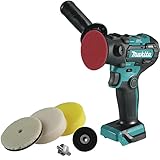
You don’t need a $200 long-throw DA to fix a cloudy headlight. You need a small pad, controllable speed, and a battery that won’t die halfway through the second lens. For most people, a budget 3-inch cordless mini polisher is the sweet spot – cheaper than a full-size car polisher, faster and more consistent than doing it by hand.
As an Amazon Associate we earn from qualifying purchases at no extra cost to you.


Why hand polishing usually disappoints
Hand polishing with a headlight kit works if the haze is light. If the lens has heavy yellowing, pitting, or that sandblasted look from highway miles, hand pressure is too uneven. You will spend 20-30 minutes per lens and still leave micro-scratches that catch light at night.
A machine lets you keep the pad flat and the abrasive working at a consistent speed. The failure mode with hand work isn’t that it doesn’t cut – it’s that you quit early because your arm is tired, or you press harder on the edges and round them off. A small cordless polisher fixes both problems for about the same price as paying a shop to do one car.
What actually matters for headlights
Forget max RPM and marketing torque claims. Three specs decide whether a cheap polisher is good for headlights:
1. Pad size: 3-inch is ideal. A 5 or 6-inch pad from a full-size DA overhangs the lens, hits trim, and makes it hard to keep even pressure on the curve. A 3-inch pad follows the contour and fits inside the bucket without taping off half the car.
2. Speed control: You want a true low end around 1,500-2,500 RPM / OPM. Anything that only does 5,000+ RPM will burn through your clear coat or sling compound everywhere. Look for at least 3-4 speed settings or a variable trigger you can feather.
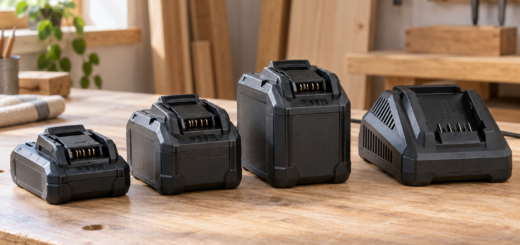
3. Battery system: This is where budget tools trap you. A $35 bare tool is cheap until you need a $45 battery and $25 charger. If you already own Ryobi 18V, Bauer 20V, Craftsman V20, or another 18V/20V system, staying in that system is almost always the best value. Runtime matters less than you think – headlight correction is 10-15 minutes of trigger time total – but a 2.0Ah battery is the minimum so voltage sag doesn’t drop speed mid-pass.
Weight and vibration matter too. A 2.2 lb mini polisher is easy to control one-handed on a vertical lens. A 5 lb full-size polisher is not. Dual-action (DA) is more forgiving than rotary for beginners because it oscillates instead of spinning on a single axis, which reduces swirl and heat. For headlights, either works, but DA is safer if you’ve never polished before.
Budget picks compared
In the $35-$70 range, you are choosing between bare tools from value brands and kits that include batteries. Prices swing $10-$15 around holidays, but this is how they stack up for headlight use:
| Category | Typical Price (Tool Only vs Kit) | Pad Size | Speed Range | Best For |
|---|---|---|---|---|
| Value 12V Mini (Worx, Popoman style) | $39-$49 bare, $59-$79 with battery | 3-inch | 2,500-5,000 OPM, 2 speeds | One-time headlight job, light weight |
| 18V/20V Mini Polisher (Ryobi, Bauer, Craftsman) | $34-$49 bare, $69-$89 kit | 3-inch | 1,500-4,800 RPM, variable speed | Best value if you own the batteries |
| Budget Full-Size 6-inch DA (Avid, ZOTA, etc.) | $49-$69 bare, $79-$99 kit | 5 to 6-inch | 1,500-6,800 OPM, 6 speeds | Also does car paint, overkill for headlights |
| Corded 3-inch Rotary Kit | $29-$39 kit | 3-inch | 500-3,000 RPM, dial control | Cheapest option if cord is okay |
For headlights specifically, the 18V/20V mini is the sweet spot. The 12V tools are fine but often lack a true low speed and their small 1.5Ah batteries fade fast when you add cutting compound friction. Full-size DAs are great value for paint correction, but that big pad wastes compound and forces you to tape everything.
If you don’t own any cordless platform, look at a budget cordless mini polisher kit that includes a 2.0Ah battery and charger in the $65-$75 range. It’s $20 more than a bare tool but saves you from hunting batteries separately. Don’t pay extra for a kit that includes cheap foam pads – you’ll replace them anyway.
What to buy if you only do this once
Be honest about frequency. If this is literally one car, one time, the cheapest option that is still controllable wins. A corded 3-inch rotary for $30 will cut faster than any 12V mini and you never worry about battery. The trade-off is heat. Rotary builds heat faster on polycarbonate, so you need to keep it moving and stay under 1,800 RPM.
If you plan to do family cars, headlights plus spot paint correction, or you already own batteries, spend $40-$50 on a bare 3-inch DA mini in your battery system. Pair it with a proper headlight restoration compound and clear coat rather than the generic cutting compound that comes in tool kits. A $15 bottle of dedicated headlight compound (Meguiar’s, Cerakote, 3M) cuts more predictably on plastic than heavy automotive cutting compound meant for clear coat.
Pads matter more than the polisher. Budget kits ship with open-cell foam that falls apart after one lens. Get a 3-pack of 3-inch foam cutting pads and a 3-pack of finishing pads. Expect to pay $12-$16 for 3 inch foam polishing pads for drill or polisher. You’ll use one cutting pad per headlight if the oxidation is heavy – trying to save a clogged pad is how you create holograms.
Technique that prevents burn-through
The most common failure with cheap polishers on headlights is not the tool, it’s burning through the remaining UV clear coat and leaving a spot that re-yellows in two months. Headlight plastic has a thin factory hard coat. Once you sand through it, you must re-seal.
Start by wet sanding only if needed. If the lens is just hazy, skip sandpaper and go straight to cutting compound on a cutting pad at speed 2-3. If it’s yellow and rough, wet sand 1000 grit, then 2000 grit, then 3000 grit, keeping the surface wet. Each step should take 60-90 seconds per lens – no more. Wipe and check. If the water slurry is yellow, you are removing oxidation. If it turns clear, stop sanding.
For polishing, use a pea-sized dot of compound, spread at low speed with the machine off, then run at 2,000-2,800 RPM with light pressure – just the weight of the tool. Keep the pad flat, overlap 50%, and keep moving at about 2 inches per second. Heat builds in seconds on plastic. If the lens is warm to touch, stop. Two thin passes beats one heavy pass. Finish with a fine polish on a finishing pad, then wipe with isopropyl alcohol and apply a 2K clear or ceramic UV sealant. That sealant is not optional – unsealed polished plastic will haze again in 3-6 months.
Tape off paint and rubber trim with painter’s tape. Sling is real with small pads, and budget polishers with only two speeds tend to sling at the high setting.
When to skip the polisher and save money
A polisher is the wrong buy in two cases. First, if the haze is inside the lens (condensation, cracked seal), no amount of polishing the outside will fix it – you need a replacement housing. Test by running your finger over the lens. If it feels smooth outside but still looks cloudy, the problem is internal.
Second, if the lens has deep pitting or cracks, polishing will make it shinier but not clear. You will remove a lot of material and still see pits. For a daily driver where you just need legal light output, a $20 hand kit and an hour of elbow grease is rational. Save the tool money.
Seasonal buying advice
Budget polishers bottom out in price twice a year: Father’s Day (June) and Black Friday through mid-December. Bare tools from Bauer (Harbor Freight), Ryobi (Home Depot), and house brands on Amazon drop to $29-$39, and kit prices fall $15-$20 when battery combos are promoted. If you need it now, check open-box or reconditioned listings – returns are common on polishers bought as gifts.
Don’t pay retail for batteries. A 2-pack of 2.0Ah or 3.0Ah clones for $35 often beats one OEM 4.0Ah for $59 if all you do is headlights. For bigger jobs, OEM batteries hold voltage better under load, but for 15 minutes of headlight work, capacity matters more than brand.