Best Budget Workshop Tools for a Beginner with a Shared Garage
What's inside
As an Amazon Associate I earn from qualifying purchases. This post may contain affiliate links at no extra cost to you.
A shared garage rewards compact, quiet tools and equipment you can put away quickly. A beginner rarely needs a full power-tool collection on day one: spend first on the tools that solve the jobs you actually have, then add compatible cordless tools as projects demand. Prices below are typical U.S. street-price ranges, not live quotes; sales and battery bundles can shift them substantially.
As an Amazon Associate we earn from qualifying purchases at no extra cost to you.


Start with the workbench essentials
Before buying powered tools, set aside roughly $50–$100 for a tape measure, combination square, utility knife, pencils, clamps, and basic hand tools. A 16- or 25-foot tape covers household projects; a combination square helps check cuts and mark right angles. Two or four clamps in the 6–12-inch range are more useful than a large set of flimsy clamps that slip under pressure.
In a shared garage, storage is part of the purchase. A lidded bin or small rolling toolbox keeps tools together and makes it easier to clear a bench or floor. Avoid buying a large stationary tool before you know where it can live, how it will be powered, and whether you can move it safely.
Choose one cordless platform
A drill/driver is the most useful first power tool for assembling furniture, drilling pilot holes, and driving screws. For many beginners, a compact 12-volt kit is sufficient and easier to handle in tight spaces. Choose an 18- or 20-volt kit if you expect regular work in dense lumber, larger holes, or a broader range of tools.
Compare the cost of the kit, not just the tool. A bare tool can look like a bargain but still require a battery and charger that cost more separately. Batteries, chargers, and tools generally work only within their brand’s platform, so settling on one line can reduce later spending. For a first purchase, look for a kit with two batteries, a charger, and a case or bag. A cordless drill/driver kit with two batteries is a practical starting point.
Compare likely first purchases
These price ranges help compare categories, but local sales and included accessories matter. A low price is less compelling if the tool needs batteries, blades, or a stand you do not already own.
| Purchase | Typical budget range | Best use | Shared-garage trade-off |
|---|---|---|---|
| Basic measuring and hand tools | $50–$100 | Layout, fastening, small repairs | Compact and quiet; quality varies most in cheap clamps and squares |
| Drill/driver kit | $80–$180 | Fasteners and general drilling | Portable; batteries and charger take storage space |
| Circular saw | $60–$140 corded; often $100–$220 cordless bare or bundled | Breaking down sheet goods and lumber | Needs a clear cutting area, support, and dust control |
| Random-orbit sander | $40–$100 corded | Smoothing panels and removing finish | Small footprint, but sanding dust spreads quickly |
| Shop vacuum | $50–$130 | Cleanup and dust collection | Useful, but noisy; hose and filters need storage |
Buy saws and sanders selectively
A circular saw is a sensible second power tool if you need to cut plywood, shelving, or lumber. A corded model is often the better value for occasional use: it avoids battery cost and does not lose charge in storage. A cordless saw is more convenient when outlets are awkward or you already own compatible batteries. Either way, budget for a suitable blade; the blade supplied in a low-cost saw may leave rough cuts.
Do not assume a table saw is the next necessary purchase. It takes floor space, creates substantial dust, and needs safe infeed and outfeed clearance. In a shared garage, a circular saw with a straightedge and stable sheet support can handle many beginner cuts for much less money. Keep hands clear of the blade path, support the offcut so it cannot pinch the blade, and follow the saw’s manual.
A random-orbit sander is useful for furniture and finish work, but a sanding block is fine for a small repair. The cheapest sanders can be louder and vibrate more; comfort matters if a job takes an hour. Use a vacuum or dust bag where compatible and wear appropriate eye and respiratory protection. Fine dust is not just a housekeeping problem.
Where cheap is fine—and where it fails
Budget hand tools and corded tools are often perfectly serviceable for occasional projects. For a drill, saw, or sander used a few weekends a year, a reputable entry-level line can be a better buy than a professional model. Pay attention to comfortable grips, a stable base, clear controls, and a warranty you can actually use.
Be cautious with no-name batteries, chargers, and safety-critical accessories. A poor battery may have short runtime or unreliable protection circuitry, while a poor-quality blade can cut badly or wear quickly. Do not buy a pile of accessories just because a kit advertises a large piece count; many inexpensive bits dull or strip under modest use. A modest assortment of decent driver bits and drill bits is usually more useful.
Plan for dust, noise, and storage
Measure the space a tool needs while it is working, not just its footprint on a shelf. A circular saw needs room for the workpiece; a sander needs a way to contain dust; a shop vacuum needs somewhere to go and an outlet nearby. In an attached home, check whether the noise is reasonable for the hours you plan to work. Ear protection is a sensible purchase even for occasional cutting.
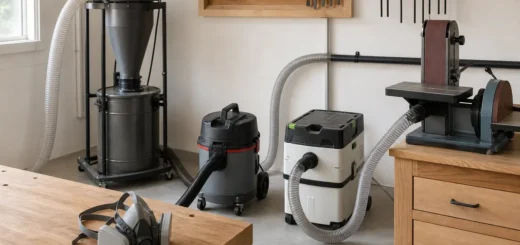
A compact shop vacuum with a suitable tool adapter can serve for cleanup and some dust collection, but it is not a substitute for proper respiratory protection. Check whether the hose fits your tool before buying: adapters are not always included, and mismatched fittings can make dust collection frustrating.
Time purchases around real sales
Holiday promotions and major sale periods can make cordless kits worthwhile, especially when a starter kit includes two batteries. Compare the sale price with the cost of the same tool, batteries, and charger purchased separately. A bundle is not a bargain if it includes tools you will not use or locks you into a platform that does not suit your needs.
For a beginner, a sensible order is hand tools first, then a drill/driver, then one cutting or sanding tool for the next planned project. Buy consumables—blades, bits, sandpaper, and fasteners—as the job requires. This keeps the initial bill manageable and avoids storing equipment that has never earned its space.