Best Budget Tools for a Small Garage Electrical Project
What's inside
As an Amazon Associate I earn from qualifying purchases. This post may contain affiliate links at no extra cost to you.
Start With the Job and the Safety Rules
A small garage electrical project might mean adding a receptacle, replacing a damaged box, installing a light, or running cable from an existing circuit. The right budget is usually $75 to $180 for hand tools and test equipment, not counting wire, boxes, breakers, or permits.
Before buying anything, identify whether the work is allowed as a homeowner project where you live. Some jurisdictions require permits or an inspection, especially for new circuits and service-panel work. Turn off the circuit breaker, lock or label it if possible, and verify the wires are dead at the work location. A breaker position is not proof of safety: mislabeled circuits, shared neutrals, and backfed wiring are real failure modes. If you find aluminum branch wiring, a crowded panel, water damage, or more than one circuit in the box, stop and call an electrician.
As an Amazon Associate we earn from qualifying purchases at no extra cost to you.


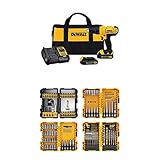
A basic electrical tester kit is the first purchase, not an optional extra. The cheapest tools are acceptable for occasional work only if they are from a recognizable safety-listed brand and you test them on a known-live source before and after testing the circuit.
The Budget Tool Kit That Covers Most Small Jobs
| Tool | Useful budget price | What to look for | Where cheap tools fail |
|---|---|---|---|
| Non-contact voltage tester | $10–$25 | Clear low-battery warning, bright indicator, audible alarm | False readings near adjacent energized wires; never use it alone |
| Digital multimeter | $20–$50 | CAT-rated input protection, fused current input, auto-ranging | Unfused or poorly protected meters can be dangerous on a panel |
| Wire stripper and cutter | $10–$25 | Clean stripping holes for common 14-, 12-, and 10-gauge wire | Loose jaws nick copper and create weak spots |
| Insulated screwdrivers | $15–$35 per set | Comfortable grip and intact insulation | Soft tips round terminal screws |
| Receptacle tester | $8–$20 | Clear indicator pattern and GFCI test button | It cannot detect every neutral or grounding problem |
| Fish tape | $10–$30 | 15–25 feet for a small garage, flexible steel or nylon body | Stiff or kinked tape gets stuck in short walls and conduit |
A wire stripper with a built-in cutter is fine for one or two projects. Do not use a utility knife to strip cable; it is easy to cut the insulation on the individual conductors. For a new garage circuit, buy the stripper sized for the cable you actually need. Twelve-gauge wire is harder to strip cleanly than fourteen-gauge wire, and forcing the wrong notch can damage it.
Buy insulated electrician screwdrivers and a wire stripper as separate tools if the combined budget set feels flimsy. A $20 hand-tool set is often a better value than a $7 multi-tool, particularly when terminal screws are tight or corroded.
Drilling, Boxes, and Pulling Cable
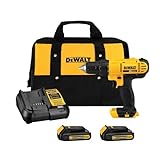
You probably do not need a new drill for a single garage project. A basic 12- or 18-volt cordless drill with a clutch is sufficient for wood framing, plastic boxes, and small pilot holes. Spend $35 to $70 on a bare tool if you already own batteries; otherwise, a drill kit with one battery and charger usually offers better value at $60 to $120. A corded drill is cheaper per unit but awkward around ladders and open framing.
Use a 1/2-inch or 5/8-inch drill bit for many cable holes, depending on the cable and local code requirements. A long installer bit helps through studs, while a paddle bit is faster in exposed wood. Keep holes centered in studs and protect wiring with nail plates where required. A bit that is too large weakens framing and leaves cable loose; a hole that is too small can scrape the jacket while pulling.
For a finished wall, a 15- or 25-foot electrical fish tape is normally enough. Nylon fish rods are easier to steer through short spaces, while steel tape handles longer straight runs. Do not use fishing line or bare wire as a substitute. Pull slowly, use cable lubricant when appropriate, and leave at least 6 inches of conductor extending from each box for termination.
Where Brand Names Matter
Brand matters most for test instruments, insulated tools, and cordless battery platforms. Established electrical-tool brands generally provide better input protection, clearer ratings, and more consistent calibration. You do not need a professional $150 meter for a garage receptacle, but avoid anonymous meters with no clear CAT rating, no input fuse information, or exaggerated claims such as “industrial” without documentation.
For strippers, pliers, screwdrivers, and fish tape, mid-priced tools from an established hand-tool brand are usually the value point. The cheapest option is fine for a one-day repair if the jaws are aligned and the insulation is undamaged. Replace any tool with cracked insulation, a loose handle, or a screwdriver tip that slips out of the terminal screw.
For drills, staying within one battery platform is often worth more than saving $20 on the first tool. Batteries can cost $40 to $100 each, so a discounted drill kit becomes less attractive if you later switch brands for a saw or light. Brushless drills last longer under repeated use, but a brushed model is adequate for occasional holes in a garage.
When to Buy and What to Skip
Tool prices usually drop around Memorial Day, July 4, Labor Day, and Black Friday. Drill kits and battery bundles see the strongest discounts, while individual testers and hand tools are commonly reduced during spring home-improvement promotions. Compare the full kit price, battery size, and warranty rather than trusting the percentage-off label. A “free” second battery is not a bargain if it is a small 1.5-Ah pack that costs nearly as much to replace as the kit.
Skip specialty tools until the job requires them. A circuit tracer, conduit bender, thermal camera, and expensive cable puller are unnecessary for most one-room garage projects. Rent a rotary hammer or buy a hole saw only when the material demands it. Put the savings toward a properly protected multimeter, a second flashlight, and replacement batteries—small costs that prevent rushed, unsafe work.
A sensible starter budget is about $25 for a tester, $25 for hand tools, $15 for a receptacle tester, and $20 for fish tape. Add $60 to $100 for a drill only if you do not already own one. That combination handles common garage work without paying for tools that sit unused after the inspection is complete.