Best Budget Bench Grinder for Sharpening Household Tools
What's inside
As an Amazon Associate I earn from qualifying purchases. This post may contain affiliate links at no extra cost to you.
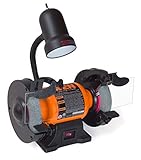
A bench grinder is useful for restoring the edge on screwdrivers, cold chisels, mower blades, punches, and other household tools. For occasional sharpening, you do not need a large industrial machine. A basic 6-inch grinder in the $40 to $80 range is usually enough, provided it has controllable speed, usable tool rests, and wheels suited to sharpening rather than aggressive stock removal.
The best budget choice for most homes is a 6-inch variable-speed bench grinder. Variable speed is helpful because it reduces heat when sharpening thin edges. A fixed-speed grinder can still work, but you must use lighter pressure and dip the tool in water more often.
As an Amazon Associate we earn from qualifying purchases at no extra cost to you.

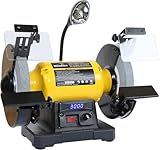

What to Look For in a Budget Bench Grinder
For household sharpening, prioritize the following specifications:
- 6-inch wheels: They are compact, inexpensive, and adequate for most small tools. Eight-inch grinders run more smoothly and remove material faster, but cost more and take up more bench space.
- Variable speed: A range around 2,000 to 3,600 revolutions per minute gives you more control. Low speed is safer for narrow edges and heat-sensitive tools.
- Tool rests that adjust securely: The rest should lock without flexing. A loose rest can change the sharpening angle as you work.
- Eye shields and spark guards: These are basic safety equipment, not optional extras. Look for guards that do not obstruct the wheel.
- A 36- or 60-grit wheel plus a finer wheel: Coarse wheels remove damage quickly; medium or fine wheels leave a more manageable edge.
- Low vibration: Excessive vibration makes it difficult to hold a consistent bevel and can loosen the machine on a workbench.
Do not choose based only on motor horsepower. Budget grinders often advertise peak horsepower rather than the power available during continuous use. For sharpening, stable operation and good rests matter more than a large number on the box.
Best Budget Bench Grinder Types
| Type | Typical price | Best use | Main drawback |
|---|---|---|---|
| 6-inch fixed-speed grinder | $40–$65 | Occasional screwdrivers, chisels, and rough repairs | Runs hot and usually has basic rests |
| 6-inch variable-speed grinder | $60–$110 | General household sharpening | More expensive and sometimes less powerful |
| 8-inch grinder | $90–$180 | Frequent use and larger tools | More space, weight, and wheel cost |
| Slow-speed grinder | $120–$250 | Controlled sharpening with less heat | Often poor value for occasional home use |
A fixed-speed 6-inch machine is the sensible low-cost purchase if you sharpen only a few times per year. It can handle a dull screwdriver or damaged chisel without trouble. The cheaper option becomes less attractive when you sharpen frequently, work on thin tools, or are still learning to control pressure. In those cases, a variable-speed grinder earns its higher price by making overheating less likely.
For a basic setup, compare 6-inch bench grinders with sharpening wheels rather than buying the cheapest unit with polishing accessories. Many low-priced machines include a coarse wheel and a wire wheel. A wire wheel is useful for rust removal, but it does not replace a fine grinding wheel for sharpening.
Wheel Choice Matters More Than Brand
The supplied wheels are often the weakest part of an inexpensive grinder. A coarse 36-grit wheel is useful for reshaping a badly damaged edge, but it removes metal quickly and can create deep scratches. A 60-grit aluminum-oxide wheel is a better general-purpose choice for carbon-steel household tools. For a cleaner finish, use an 80- or 100-grit wheel, then finish the edge with a sharpening stone.
Do not use a bench grinder as the final sharpening step for a quality chisel or plane iron. The grinder establishes the bevel; a stone or honing guide produces the cutting edge. Grinding all the way to a fine edge increases the chance of burning the steel or removing too much material.
Check the wheel diameter, arbor hole, and maximum rated speed before buying replacements. A wheel must never be operated above its marked speed. Replace any wheel with cracks, deep grooves, or a damaged mounting hole. Ring-test an unknown vitrified wheel before installation, and make sure the grinder’s flanges are clean and tightened evenly.
How to Sharpen Household Tools Without Burning Them
Start by dressing the wheel if its face is uneven or clogged. Mark the tool’s bevel with a marker so you can see where the wheel is contacting. Hold the tool against the rest, keep the bevel flat, and use light pressure. Move the tool steadily across the wheel rather than grinding one spot.
Make contact for two or three seconds, then cool the tool in water. If the edge turns blue, purple, or straw-colored, it has overheated. That discoloration can permanently reduce the hardness of a chisel or screwdriver tip. A water cup beside the grinder is cheap insurance, but do not splash water onto the wheel or electrical housing.
For a chisel, maintain the existing bevel, usually about 25 to 30 degrees, and stop when the damaged area is gone. For a screwdriver, restore the tip gradually and avoid making it narrower than the original blade. Mower blades can be sharpened on a grinder, but remove the blade first, clamp it securely, and preserve its balance by removing similar amounts from both ends.
Safety and Seasonal Buying Advice
Wear safety glasses or a face shield, hearing protection, and avoid loose clothing. Keep hands clear of the wheel and never grind on the side of a standard wheel unless it is specifically rated for side grinding. Bolt the grinder to the bench if it walks during use. A stable machine is easier to control and less likely to grab a small tool.
Budget grinders are commonly discounted around spring tool promotions, Father’s Day sales, and the November holiday period. The best deal is not always the lowest sticker price: a $55 grinder that needs a $25 replacement wheel and better rests may cost more than a $75 package with usable accessories. Check replacement wheel prices and warranty terms before buying.
If your work is limited to occasional household repairs, a fixed-speed 6-inch bench grinder is fine. Spend more for variable speed when you expect regular sharpening, want better heat control, or need to work on small, thin edges. For most homeowners, that balance delivers more value than jumping to a heavy 8-inch machine.