Best Fine-Tooth Circular Saw Blades for Smooth Cuts
What's inside
As an Amazon Associate I earn from qualifying purchases. This post may contain affiliate links at no extra cost to you.
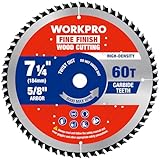
The best fine-tooth circular saw blade for most people is a 60-tooth ATB (alternate top bevel) carbide blade in 7-1/4″ — it produces near-splinter-free cuts in plywood and trim while still feeding at a reasonable pace. But “fine” is relative to what you’re cutting: the right tooth count for melamine will burn hardwood if pushed too slowly, and a blade that excels in veneered ply can feel sluggish ripping 8/4 oak. Here’s how to match the geometry to the job.
As an Amazon Associate we earn from qualifying purchases at no extra cost to you.


How Tooth Count Actually Changes the Cut
Tooth count controls how much material each tooth removes. A 24-tooth circular saw blade takes big bites — great for ripping framing lumber fast, terrible for plywood face veneer. An 80-tooth blade takes tiny bites — glass-smooth edges, but slow feed and more heat if you push it.
The rough rules:
- 24–40T: ripping and rough carpentry. Expect tear-out on plywood faces.
- 40–60T: the “combination” zone. Clean crosscuts in solid wood, acceptable plywood cuts with a zero-clearance setup.
- 60–80T: the true fine-tooth range. Plywood, melamine, MDF, laminate, trim, and crosscuts where the show face matters.
- 90T+: specialty veneer and laminate blades; mostly unnecessary unless you’re cutting high-gloss panels.
One counterintuitive point: more teeth doesn’t always mean a better cut. In thick hardwood, too many small gullets can’t clear sawdust, which causes burning, heat buildup, and a glazed edge that’s actually worse than what a 40T blade leaves. Fine tooth = thin material and delicate faces, not “more is always better.”
The Four Specs That Decide Your Finish
Hook angle
This is how aggressively each tooth leans into the cut. High hook angles (+15° to +20°) feed fast but tear grain on exit. Fine-finish blades use low or negative hook angles (0° to -5°) — the tooth shaves rather than digs. For a circular saw fine tooth blade used in plywood, look for hook angle at +5° or lower.
Kerf width
Thin-kerf blades (~0.059″–0.071″) waste less material and need less power — important on cordless saws and lower-amp sidewinders. Full-kerf (~0.098″–0.125″) runs more stable with less vibration and deflection, which shows up as cleaner edges on long cuts. If your saw is 15-amp corded, full kerf; if it’s a compact or battery saw, thin kerf.
Carbide grade
C3 or C4 micro-grain carbide holds an edge far longer than generic brazed tips, especially in MDF and laminate, which are brutally abrasive. Better carbide also means more resharpenings — a quality blade can be resharpened 3–5 times, which changes the cost math (below).
Grind and plate
ATB grinds shear fibers cleanly on plywood and hardwood. TCG (triple-chip) survives abrasive sheet goods like melamine. Laser-cut expansion slots and anti-vibration cuts in the plate genuinely reduce wobble and the fuzzy edge it causes.
Picks by Situation
These are real, widely available blades that consistently land at the top of the category — choose by what you cut most, not by the biggest tooth count on the box.
| Blade | Teeth / Grind | Kerf | Hook Angle | Best For | Price Range |
|---|---|---|---|---|---|
| Freud LU79R010 (10″) / D0760A (7-1/4″) | 60–80T ATB | Thin (~0.063″) | Low/negative | Plywood, melamine, veneered panels | $35–60 |
| Diablo D0760X / D1060X | 60T ATB | Thin | +5° | All-around fine finish on a budget | $25–40 |
| Forrest Woodworker II | 40–60T ATB | Full or thin options | ~+10° | Hardwood + ply; sharpenable for life | $110–140 |
| CMT Orange Tools 80T fine-finish | 80T ATB | Thin | Negative | Melamine and laminate worktops | $45–65 |
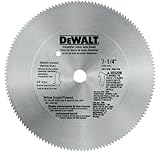
| DeWalt DWA171460 (7-1/4″) | 60T | Thin | Moderate | Cordless saws, trim carpentry on site | $20–30 |
Decision Matrix: Match Your Situation
| Your situation | Recommended spec |
|---|---|
| Weekend DIYer, occasional plywood projects, budget saw | Diablo 60T thin-kerf — cheap enough to treat as semi-disposable |
| Built-ins and cabinetry, frequent melamine/veneer | Freud 80T negative-hook — the anti-chip geometry pays for itself in saved panels |
| Serious woodworker, mixed hardwood + ply, keeps tools for years | Forrest WW2 — premium carbide, resharpenable, lowest cost per year |
| Cordless circular saw, jobsite trim work | Thin-kerf 60T (DeWalt/Makita equivalents) — preserves battery runtime |
| Ripping hardwood mostly, plywood occasionally | Keep a 24–40T for ripping and swap a 60T in for sheet goods — one blade can’t do both well |
The Cost-Per-Sharpening Math Nobody Does
A $30 fine cut circular saw blade with soft carbide typically gets one useful life — after it dulls, resharpening isn’t economical. A $120 premium blade with C4 micro-grain carbide can be professionally resharpened for ~$15–25, three or four times.
Worked example, assuming 40 sheets of plywood per year dulls a blade once:
- Budget blade: $30/year × 5 years = $150, and cut quality degrades months before replacement.
- Premium blade: $120 + (4 sharpenings × $20) = $200 over ~5 years — about the same total, but you get a sharper blade the whole time and it performs better in hardwood too.
If you cut fewer than ~15 sheets a year, the budget blade is the smarter buy. Above that, premium carbide wins on both cost and finish.
Getting the Cut the Blade Promises
A fine-tooth blade can’t fix a sloppy setup. Three things matter more than tooth count once you’re above 40T:
- Support the exit face. Tear-out happens where the tooth exits. Put the good face down (circular saws cut on the upstroke), or apply painter’s tape along the cutline, or use a sacrificial foam board underneath.
- Use a track or straightedge. Blade deflection from a wandering hand shows up as burnish marks and a wavy edge no tooth count can hide.
- Feed consistently. Stalling mid-cut in hardwood burns the edge with fine teeth because so many teeth share the heat. A steady, moderate feed — slightly faster than instinct suggests — gives the cleanest result.
- Clean the blade. Pitch buildup on the carbide acts like a wider, duller tooth. Five minutes with a blade cleaner and a brass brush often restores “dull” blades completely.
What Wears Out First
In real ownership, the carbide tips dull before anything fails — but MDF and laminate dull them 3–4x faster than solid wood. Watch for increased feed resistance and burn marks rather than a dramatic failure. Expansion slots collect pitch; clean them or you’ll get vibration. And the most common mistake: running a fine-tooth blade through dirty reclaimed lumber — one nail or embedded grit chips multiple carbide tips at once, and a blade with chipped teeth leaves tracks you’ll see after finishing.
Bottom line: buy a 60T thin-kerf blade as your default fine-tooth blade, add an 80T negative-hook blade if melamine or high-veneer plywood is your bread and butter, and keep the 24T for framing. Two blades swapped at the right moment will always outperform one “compromise” blade asked to do everything.