How to Compare Tool Kit Prices When Accessories Differ
What's inside
As an Amazon Associate I earn from qualifying purchases. This post may contain affiliate links at no extra cost to you.
Two tool kits can carry the same price tag and offer very different value. One may include more pieces but mostly duplicate bits; another may cost more because it has a better drill, two batteries, or accessories you would otherwise buy separately. Compare what you can actually use, not just the box price or piece count.
Start with the job
List the work you expect to do over the next year: assembling furniture, hanging shelves, drilling into masonry, repairing a car, or maintaining a yard. Then note which tools and consumables each job requires. A homeowner who needs a drill and driver for occasional repairs has little reason to pay extra for dozens of sockets. Someone working on a car may care more about socket sizes, a ratchet, and sturdy cases than about a cordless drill.
Separate the kit into three groups: tools you will use regularly, accessories that fit your work, and extras you probably will not use. Give the first group the most weight. A missing accessory is often easy to buy later; replacing an underpowered tool or a worn battery can cost much more.
Compare usable contents, not piece counts
“100-piece kit” is not a useful comparison by itself. One manufacturer may count every small drill bit and driver bit as a separate piece. Another may count the case, charger, and battery. Check what is included and whether sizes overlap. For a basic household kit, a handful of common driver bits and drill bits may be more useful than a large assortment with several rarely used sizes.
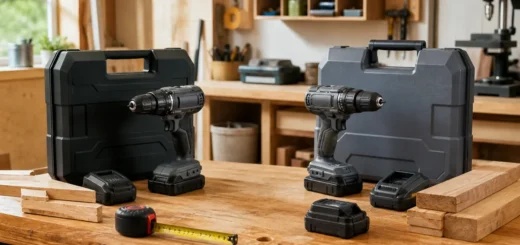
For cordless kits, compare the tool lineup, battery count, battery capacity in amp-hours (Ah), and charger. Two 2.0Ah batteries can be more practical than one 4.0Ah battery if you need to keep working while one charges. But extra batteries add value only if you use the tools enough to need them. Battery-platform compatibility matters too: a battery that fits tools you already own may justify a modest price premium.
For hand-tool kits, inspect the working range and construction. A socket set with both metric and SAE sizes may suit mixed equipment, but a narrow set of better-made metric sockets can be a better buy if that is all your work requires. Count the sizes you need, not the labels on the package.
Put the differences in a table
Use the same categories for each kit. The figures below are illustrative, not current product listings; fill in the prices and contents you find for the kits you are considering.
| What to compare | Kit A | Kit B | Why it matters |
|---|---|---|---|
| Price | $99 | $129 | Starting cost, before missing items |
| Main tools | Drill/driver | Drill/driver and impact driver | Two tools may save time on frequent fastening |
| Batteries | 1 × 2.0Ah | 2 × 2.0Ah | A spare can prevent charging downtime |
| Accessories | Mixed 40-piece set | Common drill and driver bits | Check sizes and quality, not the count |
| Items still needed | Second battery: $45 | None for planned jobs | Compare the cost of completing each kit |
| Effective cost | $144 | $129 | Price plus necessary additions |
In this example, Kit A’s lower shelf price disappears once you add a battery that the job requires. If you rarely use the drill, however, that spare battery may not be necessary—and Kit A could still be the sensible choice.
Calculate the cost of a complete setup
Use a simple calculation: kit price plus the cost of essential missing items, minus the realistic value of extras you would have bought anyway. Do not give unused accessories their full retail price. If you would never purchase a 20-piece masonry-bit set on its own, it does not make a more expensive kit that much better value.
Check accessory compatibility before assigning a price. Bits need the right shank and must suit the material; sockets need the right drive size. A basic set of wood and metal bits will not replace masonry bits for brick or concrete. Using the wrong bit can slow the job, overheat the bit, or damage the workpiece. For regular drilling into masonry, compare a hammer drill kit with masonry bits against buying a drill and compatible bits separately.
Include likely wear items in the calculation if you use tools heavily. Cheap bits can blunt or snap sooner, especially when pushed through metal or hard masonry. For occasional home repairs, an inexpensive assortment can be perfectly adequate. For repeated work, buying a smaller set of decent-quality bits in the sizes you use may cost less over time than replacing a broad, low-grade assortment.
Weigh the tool against the accessories
Accessories cannot make a weak tool suitable for demanding work. Compare useful specifications and ergonomics for the actual task: drilling capacity, speed settings, clutch control, weight, grip, and how the tool handles under load. A compact drill may be easier to use overhead, while a larger, more powerful model may be better for repeated drilling. A high-capacity battery can add weight, so it is not automatically an upgrade.
For occasional assembly and light repairs, an entry-level kit with one battery and a modest accessory set is often enough. Look at cordless drill-driver kits with a battery and charger if that is your main need. If you already own batteries in a platform, compare bare tools with complete kits; paying again for a charger and battery you do not need can erase the bargain.
Check the case, warranty, and return terms
A case is useful when it keeps parts organized and travels without popping open. It is not worth much if sockets fall out or bits have no clear size labels. Look for a case layout that lets you spot missing pieces quickly, especially for shared or vehicle kits.
Before buying, check the warranty terms and return window. A low price is less attractive if a battery fails just after the return period and replacement parts are hard to find. Keep the receipt and test the kit soon after purchase: charge each battery, run the tools, check the included sizes against the list, and open the case over a table so loose pieces do not disappear.
Time the purchase without chasing discounts
Seasonal sales can lower prices, but a discount is useful only if the kit fits your needs. Compare the sale price with recent prices where possible, and check whether the promotion changes the battery count or accessory bundle. Bundles can make direct comparisons difficult; price the missing items separately and use your effective-cost calculation.
If the job is urgent, buy the setup that covers it reliably rather than waiting weeks to save a small amount. If it can wait, monitor a short list of suitable kits and set a target price. Once one meets the job requirements at that price, stop comparing piece counts and buy it.