Best Affordable Tools for a Home Maintenance Kit Under $150
What's inside
As an Amazon Associate I earn from qualifying purchases. This post may contain affiliate links at no extra cost to you.
A useful home maintenance kit does not need to cost hundreds of dollars. For most apartments and houses, a practical starter set can cover loose hardware, furniture repairs, picture hanging, basic plumbing fixes, measuring, and small cutting jobs for less than $150. The key is buying versatile hand tools first and resisting cheap specialty tools you may use once.
As an Amazon Associate we earn from qualifying purchases at no extra cost to you.



What to buy first
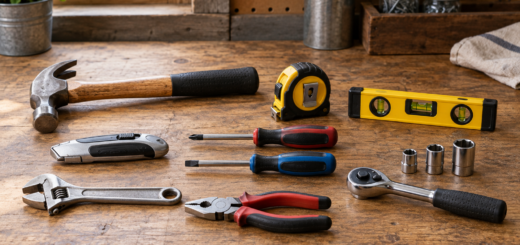
Start with a basic home tool kit that includes a claw hammer, tape measure, screwdrivers, pliers, hex keys, and a utility knife. A kit in the $35 to $60 range is usually enough for light household work. It is not automatically a bargain: some kits fill the case with duplicate screwdriver bits while omitting useful items such as locking pliers or a level.
Check the contents before buying. You want a 16-ounce hammer, a tape measure at least 16 feet long, both Phillips and slotted screwdrivers, adjustable pliers, and a bit driver with common Phillips, slotted, Torx, and hex bits. A soft-sided bag is often more useful than a molded plastic case because it leaves room for consumables and replacement tools.
A sensible under-$150 shopping list
| Tool or supply | Useful budget | What to look for |
|---|---|---|
| Basic hand-tool kit | $35–$60 | Hammer, screwdrivers, pliers, tape measure, hex keys, bits |
| Adjustable wrench | $8–$15 | Smooth jaw movement and a jaw that stays parallel |
| Utility knife and blades | $7–$12 | Tool-free blade changes and standard replacement blades |
| Level | $8–$15 | At least 9 inches long, with clear vials |
| Plumbing and electrical basics | $15–$25 | PTFE tape, a small pipe wrench, electrical tape, and a non-contact tester |
| Consumables | $15–$25 | Screws, wall anchors, picture hooks, sandpaper, glue, and spare blades |
That list totals roughly $88 to $152 depending on quality and sales. To stay under the limit, buy the hand-tool kit first, then add the adjustable wrench, level, and supplies. A dedicated pipe wrench can wait if you do not have exposed threaded pipe in your home.
Where quality matters
Spend more on tools that must grip, measure, or survive repeated force. A poorly made tape measure can develop a loose hook and be off by an eighth of an inch or more over a short distance. That is enough to make a shelf, curtain rod, or cabinet rail fit badly. Look for a wide blade, a sturdy hook, and markings that are easy to read.
Pliers are another poor place to go ultra-cheap. Loose pivots slip under pressure and can round fasteners or pinch your hand. A mid-priced pair of tongue-and-groove pliers and a pair of locking pliers will handle more jobs than a large assortment of thin, stamped pliers.
A level does not need to be expensive, but it should be straight and readable. Before trusting it, place it on a flat surface, note the bubble position, then turn it end for end. If the bubble changes position, the vial is inaccurate. Return it rather than trying to compensate.
Where the cheap option is fine
For occasional use, inexpensive screwdrivers, hex keys, and utility knives are usually adequate. The trade-off is faster wear: soft tips can round out after several tight screws, especially on furniture assembled with low-quality fasteners. If a driver slips, stop. Continuing can damage the screw head and make removal much harder.
Cheap wall anchors are acceptable for light picture frames, but do not treat their printed weight rating as a guarantee. A plastic expansion anchor rated for 25 pounds in drywall may hold far less if it is installed near a damaged hole or loaded with vibration. For shelves, mirrors, televisions, and anything above a bed, find a stud or use a properly rated hollow-wall anchor.
A budget hammer is also fine for hanging pictures and assembling furniture. Avoid using it for demolition or striking cold chisels; the face can chip, and hardened fragments can become dangerous. Wear eye protection whenever metal is being struck.
Small additions that prevent bigger problems
Add a roll of basic plumbing repair supplies before you buy specialty tools. PTFE tape, a small adjustable wrench, a bucket, and replacement faucet washers can handle many drips. PTFE tape belongs on tapered pipe threads, not on compression fittings or the threads of a faucet aerator. Over-tightening can crack plastic fittings or damage valves.
A non-contact voltage tester is worthwhile for simple electrical checks, such as confirming whether a receptacle or switch wire may still be energized. It is not proof that a circuit is safe. Turn off the breaker, verify with the tester, and avoid opening electrical boxes unless you understand the work and local requirements.
Keep a few sizes of screws, wall anchors, and picture hooks on hand. Buying a mixed box is cheaper than repeated hardware-store trips, but sort it immediately. Unsorted fasteners disappear into a drawer and encourage using the wrong screw for the job.
When to buy
Tool kits are often discounted around Father’s Day, Black Friday, and the weeks before Christmas. These promotions are useful, but compare the item count and contents rather than the advertised percentage off. A kit reduced from $100 to $50 may contain the same thin tools as a normally priced $45 kit.
Buy cold-weather supplies in late summer or early fall, when prices on weather stripping, caulk, pipe insulation, and furnace filters are often better than during the first cold snap. Spring is a good time to look for levels, pruning tools, outdoor fasteners, and small pressure-washer accessories. Store caulk and water-based adhesives indoors; freezing can ruin them before you ever open the tube.
Avoiding duplicate purchases
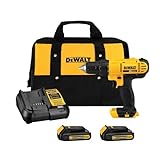
Before adding a tool to the kit, check whether it solves a problem your current tools cannot. An adjustable wrench is more useful than three fixed-size wrenches for occasional household repairs, while a separate ratchet set becomes worthwhile only when you regularly work on bicycles, appliances, or vehicles. Likewise, a compact cordless screwdriver can save time on furniture and cabinet hardware, but it should supplement—not replace—a manual driver. Use low torque near plastic parts and finish the last turns by hand to avoid stripped threads.