Best Affordable Portable Bandsaw for Small Metalworking Projects
What's inside
As an Amazon Associate I earn from qualifying purchases. This post may contain affiliate links at no extra cost to you.
A portable bandsaw is one of the cleanest ways to cut threaded rod, conduit, angle iron, pipe, and small bar stock. It produces less spark and fewer abrasive fumes than an angle grinder, and the narrow blade wastes less material. For occasional metalworking, however, the cheapest saw is not automatically the best value. Battery cost, blade availability, cutting capacity, and guide quality can matter more than the price printed on the box.
As an Amazon Associate we earn from qualifying purchases at no extra cost to you.
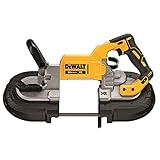


The best value choice for most small projects
For a home workshop, a corded portable bandsaw is usually the least expensive complete setup. A 10-amp-class corded saw commonly costs about $120 to $220, while a quality cordless tool body may cost $180 to $350 before adding a battery and charger. If you do not already own batteries from that brand, the cordless option can easily cost twice as much.
A corded saw is the sensible choice for cutting steel at a bench, in a garage, or near an outlet. It delivers consistent power and avoids stopping halfway through a cut. The disadvantage is the cord: it can get in the way when cutting long stock or working on a vehicle.
Look for a portable saw with roughly a 4- to 5-inch round cutting capacity, a variable-speed trigger or dial, and a standard blade size that is easy to find. A compact model is easier to control, but a very small throat limits the size of tubing and angle iron you can cut safely.
If you already own compatible batteries, a cordless portable bandsaw can be a good value. Otherwise, compare the price of the saw, battery, and charger as one package.
Portable bandsaw options compared
| Type | Typical street price | Best use | Main trade-off |
|---|---|---|---|
| Basic corded | $120–$180 | Occasional cuts in pipe, rod, and angle iron | Less convenient away from an outlet; guides may be basic |
| Better corded | $180–$300 | Frequent home-shop work and thicker stock | Higher upfront price without cordless convenience |
| Cordless, tool only | $180–$350 | Field work and repeated cuts on installation jobs | Battery and charger may add $80–$200 |
| Cordless kit | $250–$500 | Buyers entering a battery platform | Most expensive route for occasional use |
What to check before buying
Cutting capacity is the first specification to verify. A claimed 5-inch capacity normally refers to round stock under ideal conditions. The practical opening may be smaller when cutting rectangular tubing, channel, or bundled pieces. For common DIY work, a 4- to 4-1/2-inch capacity is enough for exhaust tubing, conduit, small structural tube, and bar under about 2 inches wide.
Blade speed matters more than maximum motor wattage. Steel generally cuts best at a slower speed than aluminum or plastic. A variable-speed range around 100 to 350 feet per minute gives useful control. A single-speed saw can work, but it makes tooth selection more important and increases the chance of overheating a blade.
Check the blade dimensions and tooth availability before ordering. A common blade size is easier to replace than an unusual one sold by only one supplier. For general steel, a bi-metal blade with roughly 14/18 teeth per inch is a practical starting point. Thin-wall tubing benefits from more teeth per inch; thick solid stock needs fewer teeth so the gullets can clear chips.
Also inspect the shoe and blade guides. A rigid shoe helps keep the saw from twisting into the work. Poor guides allow the blade to wander, especially when starting a cut. A bargain saw can still be worthwhile if you only cut light tubing, but expect to replace the supplied blade quickly if it is dull, improperly tensioned, or made from low-grade steel.
How budget brands compare with established brands
Low-cost brands are attractive when the saw will make only a few dozen cuts per year. The cheaper option is fine for occasional threaded rod, EMT conduit, thin-wall tubing, and small angle iron. At that usage level, spending an extra $150 may not produce a meaningful return.
Established professional brands usually offer better trigger control, stronger blade tracking, more durable gearboxes, and a larger service network. Those advantages show up when cutting several dozen pieces in one session or working in dirty, cramped conditions. They also tend to have better balance, which reduces wrist fatigue during long cuts.
Battery platforms are where brand value becomes significant. If you already have several batteries from a major tool line, buying a tool-only saw may be cheaper than starting over with a corded model and extension cord. If you own no batteries, do not compare a bare tool with a corded kit. Compare complete working prices.
For a basic corded metal-cutting portable bandsaw, spending around $150 to $200 is often the value sweet spot. Below that range, quality control becomes less predictable. Above it, pay extra only for features you will use, such as better speed control, a larger capacity, or a stronger warranty.
Common failure modes and how to avoid them
Blade breakage is usually caused by excessive feed pressure, incorrect tension, or twisting the saw during a cut. Let the teeth do the work. On a 1-inch solid steel bar, a controlled cut may take 30 seconds or more; forcing it can strip teeth in seconds.
Tooth stripping happens when the work is too thin for the blade pitch. As a rule, keep at least three teeth engaged in the material at once. Clamp small pieces firmly, and avoid cutting loose bundles of thin tubing unless the pieces are secured together.
Motor overheating is another cheap-saw problem. Pause after several heavy cuts, keep the vents clear, and do not run a corded tool through an undersized extension cord. For typical garage use, a 12- or 14-gauge extension cord is a safer choice than a lightweight household cord, particularly with a 10-amp motor.
When to buy and what to budget for
Portable bandsaws often see discounts during major holiday sales, spring home-improvement promotions, and tool-brand events in late summer. Battery kits are more likely to be discounted than bare corded saws because brands use bundled batteries to attract buyers to a platform.
Set aside another $20 to $50 for replacement bi-metal blades, and budget for a sturdy clamp or vise if you do not already have one. A $140 saw used with a proper vise and good blade will usually outperform a $250 saw used freehand on loose material. For occasional small metalworking, buy the corded model and spend the difference on blades and workholding. Choose cordless only when mobility or an existing battery system genuinely saves time.
For buyers who want a ready-to-use kit, compare portable bandsaw kits with replacement blades rather than judging the saw alone. That reveals the real first-year cost and helps avoid a low advertised price that requires expensive extras.