Best Budget Portable Table Saw for a First Workshop
What's inside
As an Amazon Associate I earn from qualifying purchases. This post may contain affiliate links at no extra cost to you.
A first table saw does not need to be a contractor-grade machine. For a small workshop, the best value is usually a portable jobsite saw with a 10-inch blade, a usable rip fence, and enough capacity for the sheet goods and lumber you actually handle. Expect to spend roughly $250–$500 for a new budget saw; sales can shift that range, and stand or blade quality may change the real cost.
Prices and model availability change, so compare features rather than relying on a familiar brand name alone. A low price is a poor deal if the fence will not stay parallel to the blade or the saw lacks basic safety equipment. A portable 10-inch jobsite table saw is a sensible starting category for most first workshops.
As an Amazon Associate we earn from qualifying purchases at no extra cost to you.

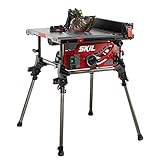

What to buy for a first workshop
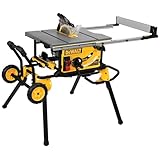
Look for a 10-inch blade, a rip capacity of at least 24 inches to the right of the blade, a riving knife, a blade guard, and anti-kickback pawls. A 24-inch capacity lets you rip a standard 48-inch-wide plywood sheet lengthwise in two passes only if you can safely support the overhanging panel; it does not make handling a full sheet alone easy. For sheet goods, plan on a second person or a support table.
Fence quality matters more than a few extra amps on the motor. The fence should lock without shifting, and it should stay parallel to the blade when locked. Check it with a ruler or calipers at the front and rear of the blade. A small discrepancy can pinch a board during a rip, spoil the cut, or contribute to kickback. Many budget saws need setup out of the box, so treat calibration as part of the purchase rather than a sign that every inexpensive saw is defective.
For a compact garage or basement shop, a folding stand is useful but not essential. A basic saw on a stable, level bench can be a better value than a bundled stand that wobbles. Check whether the stand is included before comparing prices: a saw advertised at a lower price may cost more once you add a stand, a decent blade, and dust-control fittings.
Budget saw choices compared
| Option | Typical cost | Best for | Main trade-off |
|---|---|---|---|
| Entry-level portable saw | $250–$350 | Occasional home projects and rough lumber breakdown | Fence, stand, and included blade may need attention |
| Better-equipped jobsite saw | $350–$500 | Frequent weekend use and more repeatable cuts | Higher price; still louder and less rigid than a cabinet saw |
| Used portable saw | Varies; often below new retail | Buyers able to inspect and test before paying | Wear, missing guards, or unavailable parts can erase the savings |
These are broad shopping ranges, not fixed prices. A higher-priced saw can be worth it when its fence, adjustment controls, and included stand are clearly better. If you only need a saw for a few shelves or a workbench, the entry-level option is fine once you verify its condition and accuracy. For repeat furniture parts, a steadier fence and simpler adjustments can save time and wasted stock.
Where to save—and where not to
The included blade is often a compromise. A general-purpose blade can handle basic cuts, but a separate 40-tooth combination blade may leave a cleaner edge in plywood and hardwood than a coarse construction blade. Do not spend your entire budget on a premium blade before checking whether the saw’s fence and arbor run true. A good blade cannot correct a misaligned fence.
Dust collection is another common weak point. Most portable saws have a small outlet, but fine dust still escapes around the blade and through the cabinet. Connect a shop vacuum if you have one, and wear eye and hearing protection. These saws are loud; hearing protection is worthwhile even for short cuts. Avoid using the saw in a closed room without controlling dust.
Never remove the riving knife or guard just to make a cut easier. If a cut genuinely requires removing the guard, understand the added risk and use a push stick, suitable support, and a clear outfeed path. Keep hands out of the blade line, and do not rip narrow stock freehand. A table saw’s low purchase price does not make its safety equipment optional.
Used buys and seasonal timing
A used saw can be a good deal if you can run it before buying. Check that the blade raises, lowers, and tilts smoothly; the fence locks firmly; the table is not badly damaged; and the guard and riving knife are present. Listen for grinding or inconsistent motor speed. Test a straight rip in scrap and measure the front and rear distance from fence to blade. If the seller cannot demonstrate it, price the saw as a repair project, not a ready-to-use bargain.
For new tools, compare prices around major holiday sales and seasonal home-improvement promotions, but check the ordinary price first. A discount is meaningful only if the package includes the features you need. Compare the saw, stand, blade, and return policy together, and confirm that replacement parts are available for the brand. A discontinued bargain can become expensive if a cracked adjustment wheel or missing fence component cannot be replaced.
A practical buying check
Before paying, confirm the saw has a 10-inch blade, at least 24 inches of right-side rip capacity if you plan to cut plywood, a riving knife and guard, and a fence that locks squarely. Check whether a stand is included and whether the saw fits your storage space. If the budget is tight, a basic saw with a sound fence and intact safety parts is a better choice than a feature-heavy model with poor alignment. If you want to compare current budget packages, search for budget portable table saws with stands and compare the complete kit price, not just the headline number.