Best Value Folding Work Table for Temporary DIY Projects
What's inside
As an Amazon Associate I earn from qualifying purchases. This post may contain affiliate links at no extra cost to you.
A folding work table is worth buying when a project needs a stable surface for a few hours, not a permanent bench taking up garage space. For temporary DIY jobs, the best value is usually a basic, full-size plastic-top folding table with sturdy steel legs—not the cheapest small camping table and not an expensive adjustable system unless you’ll use its extra features.
As an Amazon Associate we earn from qualifying purchases at no extra cost to you.


What value means for temporary work
Compare the table’s usable top, working height, rated capacity and setup time against its price. A table that costs a little more but opens quickly and stays put can save frustration on repeated jobs. For one weekend of light assembly, though, paying extra for clamps, height adjustment or a specialized top may not make sense.
Start with the work. Painting trim, sorting hardware or assembling a small cabinet calls for a broad, easy-to-clean surface. Cutting long boards or supporting heavy sheet goods calls for something larger and more rigid—or for separate sawhorses and a sacrificial panel. A folding table is not automatically a safe substitute for a proper cutting station.
The main types and their trade-offs
| Type | Best for | Typical trade-off |
|---|---|---|
| Basic folding banquet table | Assembly, painting, sorting and light repairs | Good surface area for the money; bulky to store and often fixed-height |
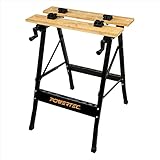
| Compact folding work table | Small spaces and quick, light-duty jobs | Easy to carry, but limited room for larger projects |
| Adjustable work table | Mixed tasks, uneven floors and users who want different working heights | More versatile, usually costs more and has more moving parts |
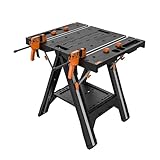
| Clamping workbench | Holding small pieces during sanding or assembly | Useful built-in clamping, but often less spacious than a banquet table |
A common full-size table is roughly 6 feet long and 30 inches wide; smaller tables may be about 4 feet long. Check the dimensions before buying. A top that looks generous in a product photo can feel cramped once you lay out a project, tools and fasteners. For occasional home use, a basic 6-foot folding work table is a sensible place to start if you have room to store it.
Check these details before paying
Capacity is not the whole story. A listed load limit may describe evenly distributed weight, not a heavy object concentrated in the middle or near an edge. Don’t assume a table rated for a large total load can safely hold a person, a running saw or a stack of lumber. Keep the heaviest items over the legs and follow the manufacturer’s instructions.
Look at the frame and feet. Thin legs can wobble on a smooth garage floor, and loose leg braces can fold or shift under sideways pressure. Check that each leg locks open, the braces engage fully and the feet sit flat. A table that rocks empty is a poor bargain for detail work. Uneven ground is especially troublesome: don’t prop up a leg with a loose scrap that can slip.
Consider the top material. Molded plastic is light and easy to wipe down, but it can flex and may be damaged by sharp tools, solvents or heat. Use a plywood offcut as a sacrificial layer for cutting or messy work, and check chemical labels before cleaning. A wood or composite top may feel firmer but can stain, swell or deteriorate if stored damp.
Test the folded shape against your storage space. Measure the table folded, including handles and protrusions, and check its weight if you’ll carry it alone. Pinched fingers and awkward lifting are real drawbacks of some folding designs. If you’ll open and close it often, look for an uncomplicated lock and a handle you can grip comfortably.
When a pricier table earns its keep
Adjustable height helps when one fixed table is uncomfortable for both detail work and larger assembly tasks. Clamping features matter when you regularly hold small parts in place. Some tables can link with another unit or use accessories, which is useful for repeat projects but adds cost and storage needs. Compare those features with a plain folding surface rather than assuming “workbench” on the label means better value.
If your jobs involve frequent sanding, drilling or clamping, compare folding clamping workbenches with basic tables. They can hold a small workpiece more securely, but their clamping jaws and narrower tops may be less convenient for spreading out parts. For occasional painting or flat-pack assembly, a simple table and a few clamps are often cheaper and more adaptable.
Buy at the right time, but compare the full price
Folding tables often see seasonal promotions around spring project season, summer outdoor use and major holiday sales. Compare the final price, shipping cost and return policy rather than relying on a claimed markdown. A low online price can lose its advantage if delivery is expensive, while a local store may let you inspect the leg locks and wobble before buying.
For a single short project, borrowing or buying a used table can be the best value. Inspect used tables for cracked tops, bent legs, missing pins and braces that no longer lock. A cosmetic scuff is usually harmless; a cracked hinge or a leg that can fold under pressure is not. Don’t take a damaged table just because it’s cheap.
A practical choice by project
For light, occasional DIY, choose a basic folding table sized for the project and put a sacrificial board on top when cutting or sanding. For cramped storage, choose a compact table only if its smaller work area won’t force tools and parts onto the floor. For repeated precision work, pay more for stable locks, useful height adjustment or clamping—whichever feature you will actually use.
Before starting, open the table fully, confirm every lock is engaged, and press down gently at the corners to check for movement. Keep heavy loads centered, protect the surface, and move the table rather than dragging it with weight on top. Those simple checks matter more to safe, steady work than buying the most expensive folding bench in the aisle.