Best Budget Tools for Seasonal Gutter and Downspout Maintenance
What's inside
As an Amazon Associate I earn from qualifying purchases. This post may contain affiliate links at no extra cost to you.
What you need for seasonal gutter maintenance
For a typical one- or two-story house, a sensible budget setup is a sturdy ladder, work gloves, a small scoop or gutter-cleaning tool, a bucket, and a garden hose. Add a plumber’s hand auger if a downspout stays blocked after you clear the gutter opening. Most homeowners do not need a powered tool or a premium telescoping system for two cleanings a year.
Plan to clear gutters in late fall after most leaves have dropped, then check them again in spring for seed pods, roof grit, and debris left by winter. The right purchase depends more on roof height, ground conditions, and the amount of debris than on brand. A basic plastic scoop may cost only a few dollars and work well in an open, accessible gutter. A long-reach tool can reduce ladder moves, but it is harder to control and may not remove wet, packed leaves.
As an Amazon Associate we earn from qualifying purchases at no extra cost to you.


Budget picks and where to spend
Start with safety rather than reach. A ladder that is too short encourages standing on the top steps or leaning sideways—both are reasons to stop and reposition. On firm, level ground, an extension ladder should extend about 3 feet above the roof edge when you use it to access the roof. Follow the ladder’s load rating, include your body weight and tools, and use a stabilizer where appropriate. Do not set a ladder on soft soil, wet decking, or a slope without a suitable, stable setup.
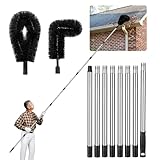
For hand cleaning, choose a scoop that fits the gutter’s width and does not have sharp edges that could damage seams or coatings. A bucket with a hook is handy, but a rope-secured bucket is not a substitute for keeping three points of contact on a ladder. A leaf blower attachment or long-reach gutter tool can be useful from the ground, but it may scatter debris, miss material stuck at corners, or push leaves over the roof edge. Buy it only if your gutters are reachable and mostly dry debris is the problem.
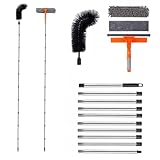
Browse basic gutter scoops and hand-cleaning tools if you want a low-cost starting point. For homes where frequent ladder repositioning is the main inconvenience, compare telescoping gutter-cleaning tools, but check the advertised reach against your actual gutter height and read the return policy. A tool’s stated length does not guarantee easy control at full extension.
Compare the practical options
| Option | Typical budget | Best for | Main limitation |
|---|---|---|---|
| Plastic scoop and gloves | About $5–$20 | Open gutters with leaves and small debris | Requires ladder access; may not loosen packed material |
| Garden hose with spray nozzle | About $10–$30 if you need a nozzle | Rinsing loose grit and checking water flow | Can spray mud onto siding; does not reliably clear a solid blockage |
| Telescoping cleaning attachment | About $20–$60 | Ground-level clearing on suitable, low obstructions | Awkward at full reach; can leave corners and compacted debris untouched |
| Hand auger for downspouts | About $15–$40 | One stubborn blockage after the outlet is checked | Can snag or damage thin fittings if forced |
Prices are rough shopping ranges, not guaranteed current prices; materials, length, and included fittings affect cost. If you already own a hose, ladder, and gloves, the cheapest useful addition is often a scoop. Spend extra on a ladder or stabilizer only when your existing setup is unsafe or unsuitable. A low-priced ladder is not a bargain if it flexes, has damaged feet, or is too short for the job.
Clear gutters without creating a bigger problem
Work only in dry, calm conditions. Wet leaves are heavier and slippery, and gusts can destabilize a ladder. Wear gloves and eye protection; gutters can contain sharp metal edges, screws, and bird or insect debris. Remove loose material by hand or scoop, placing it in a bucket or on a tarp rather than dropping it into planting beds or onto a walkway. Do not lean out to reach a few extra feet. Climb down and move the ladder instead.
After removing debris, flush the gutter with a hose at the end farthest from the downspout. Watch the flow. Water standing in a section may indicate a sag, a blocked outlet, or a gutter installed with insufficient slope—not just leftover dirt. If water spills over the front during a normal hose test, check for a blockage and inspect whether the gutter is pulling away from its brackets. Do not try to correct a sag by bending the gutter while standing on a ladder; the fasteners or fascia may need repair.
A hose nozzle is enough for most checks. A pressure washer is rarely necessary and can force water behind siding, damage seams, or strip paint. If you want a separate nozzle for rinsing and testing flow, a basic adjustable garden hose nozzle is usually a better-value purchase than a high-pressure attachment.
Unblock downspouts carefully
First check the outlet and any removable extension or splash block. Leaves often collect at the bottom, where they are easier to remove than a blockage higher up. If water still backs up, disconnect a removable lower section and inspect it. A gentle hose flush may clear loose debris; aim from the bottom upward only if the joint can handle the pressure, and stop if water backs up into the gutter.
For a firm blockage, a short hand auger can help. Feed it slowly and avoid forcing it around tight elbows: thin plastic downspouts can split, and metal seams can be damaged. Do not use a powered drain snake in a light-gauge downspout. If an auger meets a hard obstruction, or water is backing up inside the building, stop and call a qualified professional. You can compare basic hand drain augers for occasional household use; a modest manual unit is enough for many simple clogs.
When a budget tool is not enough
Skip DIY ladder work on a steep roof, near overhead power lines, on unstable ground, or anywhere you cannot place the ladder securely. Hire a professional if the gutter is above a second story, the fascia is rotten, brackets are failing, or you find a persistent leak or major deformation. The budget-friendly choice is not always the tool with the lowest price: it is the option that clears the debris without turning a routine seasonal job into a fall, a damaged downspout, or a repair that costs more than the cleaning.