Best Budget Torque Wrench for Basic Home Garage Maintenance
What's inside
As an Amazon Associate I earn from qualifying purchases. This post may contain affiliate links at no extra cost to you.
A torque wrench is one of the few garage tools where “tight enough” can be either unsafe or expensive. Under-tighten a wheel lug and it can loosen. Over-tighten an aluminum drain plug, spark plug, or small fastener and you can strip threads. For basic home maintenance, the best budget torque wrench is usually a 3/8-inch click-style wrench covering roughly 20 to 100 ft-lb—not the cheapest wrench on the shelf, and not an oversized professional unit.
As an Amazon Associate we earn from qualifying purchases at no extra cost to you.

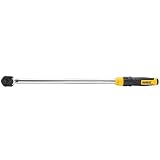
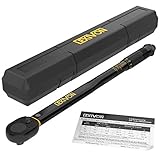

The best starting point: a 3/8-inch click torque wrench
A 3/8-inch drive handles many jobs found in a home garage: wheel lugs on smaller vehicles, brake hardware, drain plugs, suspension fasteners, and general engine work. A useful range is about 20–100 ft-lb. Some budget tools advertise a wider range, such as 10–150 ft-lb, but accuracy is usually less convincing near the ends of that scale. Torque wrenches are generally most reliable in the middle of their stated range.
For a normal passenger car, check the owner’s manual before buying. Wheel lug torque commonly falls somewhere around 75–100 ft-lb, but it varies by vehicle. A 3/8-inch wrench can cover that range, though a 1/2-inch wrench is more comfortable for frequent truck or SUV wheel work. If wheels are your main reason for buying, compare 1/2-inch click torque wrenches instead.
| Torque wrench type | Useful range | Best for | Main drawback |
|---|---|---|---|
| 1/4-inch click | 20–in-lb to 200 in-lb | Small engine, motorcycle, and electronics fasteners | Usually too small for wheel lugs |
| 3/8-inch click | 20–100 ft-lb | General car and home garage maintenance | Limited for large truck fasteners |
| 1/2-inch click | 50–250 ft-lb | Wheel lugs, trucks, and suspension work | Awkward and less precise for small fasteners |
| Digital or electronic | Varies widely | Clear readout and audible alerts | Costs more and needs batteries |
How much should a budget wrench cost?
At roughly $25–$45, you can find a usable click wrench for occasional work. These are reasonable for changing brake pads, replacing a drain plug, or checking wheel lugs once or twice a year. Expect a basic case, a simple locking handle, and a certificate that may provide limited information about testing. The cheaper wrench can be fine if you use it infrequently and store it correctly.
The $45–$90 range is the practical value zone. Wrenches here often have a smoother adjustment mechanism, clearer markings, a more secure lock, and better consistency from one setting to another. That does not automatically make them laboratory-accurate, but it usually improves usability and reduces the chance of accidentally setting the tool incorrectly. For most home mechanics, this is where I would spend the money.
Above $100, you are often paying for better calibration control, a stronger ratchet, longer warranty support, or a professional brand. That can be worthwhile for daily shop use. It is harder to justify for one oil change every few months. An inexpensive wrench used carefully is more useful than a premium wrench left unused because the owner is afraid to scratch it.
Features that matter more than brand names
Look for a micrometer-style scale that is easy to read, a positive locking collar or handle, and a reversible ratchet head. The locking mechanism matters because a handle that slips during adjustment can change the setting by 10 or 20 ft-lb without being obvious. A wrench should also include the unit you use most—ft-lb for many automotive jobs, or in-lb for small fasteners.
Do not choose a wrench just because it claims an extreme range. A 3/8-inch tool marked from 5 to 150 ft-lb may be less useful than one rated from 20 to 100 ft-lb if you need dependable readings in that middle area. Also check whether the scale is printed on both sides. A dual-scale handle is convenient, but the numbers are often cramped and harder to read accurately.
For a low-cost option, consider a 3/8-inch drive click torque wrench with a case. The case is not cosmetic: it protects the adjustment mechanism from dirt, moisture, and accidental impacts in a toolbox.
How to use a budget torque wrench correctly
First, tighten the fastener with a normal ratchet until it is snug, then use the torque wrench for the final tightening. Keep the socket square on the fastener and pull smoothly from the center of the handle. Do not jerk the wrench, add a pipe to the handle, or use it as a breaker bar. If the tool clicks, stop pulling immediately. Repeated clicks can add significant torque beyond the target.
For wheel lugs, tighten in a star or crisscross pattern and make a final pass at the specified setting. Do not lubricate wheel studs unless the vehicle manufacturer specifies it; oil or anti-seize changes the friction and can make the actual clamping force much higher than expected. For drain plugs, replace a damaged crush washer rather than compensating by tightening harder. Stripped oil-pan threads are a common result of excessive torque.
Accuracy, calibration, and storage
Budget torque wrenches are measuring tools, but they are not maintenance-free. Before relying on one for critical work, test it against a known-good wrench if possible, or have it checked by a calibration service. A certificate in the box is not proof that the tool will remain accurate after being dropped.
After use, return a click wrench to its lowest marked setting without going below it. This relaxes the internal spring. Store it in its case, keep it dry, and avoid using it to loosen fasteners. A fall onto a concrete floor can change its accuracy even when the body looks undamaged. If the handle no longer locks, the scale slips, or the click becomes inconsistent, replace or recalibrate it.
When to buy and when to spend more
Torque wrenches often see discounts during spring vehicle-maintenance promotions, Father’s Day sales, and the weeks before winter tire changes. Black Friday and holiday tool sales can produce good prices, but check the normal selling price first; a large percentage discount is not necessarily a bargain.
If you only need to torque lug nuts once a year, a basic 1/2-inch wrench may be the cheaper answer, especially if it covers your vehicle’s specification comfortably. If you perform mixed maintenance, choose the 3/8-inch model and add a 3/8-inch torque-wrench socket set only when needed. Buy a 1/4-inch wrench later if you routinely work on small fasteners. Matching the wrench range to the job is more valuable than paying for a famous logo.