Best Affordable Caulking Tool for Clean Renovation Finishes
What's inside
As an Amazon Associate I earn from qualifying purchases. This post may contain affiliate links at no extra cost to you.
A caulking tool can be as simple as a manual gun or as expensive as a powered applicator. For most homeowners, a basic, sturdy manual gun is the best value: it costs little, handles ordinary sealant jobs, and gives you enough control for neat lines once you learn the trigger. Spending more makes sense for repeated work, thick materials, or sore hands—not just to get a cleaner finish.
As an Amazon Associate we earn from qualifying purchases at no extra cost to you.
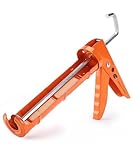
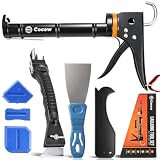
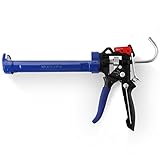

Best value: a smooth-rod manual caulk gun
Look for a manual gun with a smooth rod, a comfortable trigger, and a revolving barrel. Smooth-rod guns release pressure more easily than basic ratchet-rod designs, which helps reduce the ooze that continues after you let go of the trigger. A revolving barrel can follow a corner without twisting the whole gun. A built-in cutter and puncture wire are useful, but neither is essential if you already have a utility knife and a long nail.
Budget models often cost about $5–$12; better-built manual guns commonly fall around $10–$25. Prices vary by store and season, so compare the features and construction rather than relying on one price threshold. For a homeowner sealing a tub, trim, or a few window joints once or twice a year, a well-made basic model is usually enough. Compare smooth-rod caulk guns before buying.
Compare the main options
| Type | Typical price range | Best for | Main trade-off |
|---|---|---|---|
| Basic manual, ratchet rod | $5–$10 | Occasional small jobs | More pressure may remain after releasing the trigger |
| Smooth-rod manual | $10–$25 | Most household repairs and finishing | Still takes hand pressure on long or stiff beads |
| High-thrust manual | $15–$35 | Thick sealant or repeated use | Can dispense too quickly if you squeeze hard |
| Powered caulk gun | $50–$200 or more | Large jobs and frequent use | Higher cost, more weight, and battery upkeep |
These ranges are broad retail estimates, not guaranteed current prices. A premium manual gun can be a worthwhile upgrade if you regularly use stiff construction adhesive or work through many tubes. For one bathroom bead, it is usually unnecessary. Powered guns make the strongest case on long runs: consistent motor-driven flow can reduce hand fatigue, but the tool is heavier and may be awkward around tight corners.
What matters more than a low sticker price
Check the release mechanism first. With a manual gun, letting go of the trigger should stop the plunger from forcing more material out. Some ooze is normal because a tube remains under pressure, but a clean release makes it easier to stop a bead at the right point. Keep a rag nearby and release pressure before pulling the nozzle away.
Next, check the frame and rod. A flexible frame can make a full tube wobble, while a rough rod can catch instead of advancing smoothly. If the handle feels cramped in your hand, a long job will make that more noticeable. High-thrust ratings can help with thick sealant, but they do not guarantee better finish quality. A narrow nozzle opening and steady trigger control matter more for a neat line.
For most paintable interior trim and bathroom maintenance, a smooth-rod manual gun is the sensible starting point. For repeated work with thick adhesive, consider a high-thrust manual version. Search by type and read recent reviews for comments about rod sticking, trigger comfort, and pressure release: compare high-thrust manual caulk guns.
A cleaner bead starts with setup
Even a cheap gun can lay a tidy bead if the joint is clean and the nozzle is cut correctly. Remove loose old caulk, dust, and grease, then let the surface dry if the sealant instructions require it. Cut the nozzle at roughly a 45-degree angle, starting with a small opening—about 1/8 inch for a narrow trim joint. You can enlarge it if the bead is too small; you cannot shrink it once cut.
Hold the nozzle at a consistent angle and move at a steady pace while squeezing lightly. A common failure is cutting the opening too wide, then trying to control a flood of sealant with the trigger. Another is pushing the nozzle so slowly that material piles up at the start. Test on scrap or an inconspicuous section first. Smooth the bead with a tool or method approved for that sealant; water is not appropriate for every product. Follow the tube label for cleanup and curing times.
Some guns include a nozzle cutter and puncture wire, but the cutter can leave a rough opening and the wire may not reach a plug far inside the tube. A utility knife and a long nail often do the job. Do not puncture the inner seal until you are ready to use the tube. If you stop partway through, seal the nozzle to limit drying; an opened tube may still cure and become unusable before your next project.
When to spend more—and when to buy
Buy a basic manual gun if you have a few short seams, can comfortably squeeze a trigger, and expect to use it only occasionally. Upgrade if hand fatigue affects your work, you routinely use stiff products, or you have enough long joints to make consistent flow difficult. A powered gun is a productivity purchase, not a requirement for a clean renovation finish. Before buying one, check whether its battery is included and whether you already own compatible batteries; those costs can change the value considerably.
Prices on hand tools are not reliably seasonal, but spring renovation promotions and late-year clearance events can produce discounts. Compare the final price with local hardware stores, especially for inexpensive manual guns where shipping can erase an online saving. Buy ahead of the project rather than waiting for a sale if the sealant has a limited shelf life or the work is time-sensitive. For a powered applicator, comparing battery compatibility and warranty terms is more useful than chasing a small discount: browse cordless caulk guns.
For the typical DIYer, the affordable choice is a smooth-rod manual gun in the roughly $10–$25 range, with a comfortable trigger and reliable pressure release. A cheaper ratchet gun is fine for a small, occasional job; pay more only when the material, workload, or your hands make the upgrade useful.