Best Budget Tools for Replacing a Bathroom Exhaust Fan
What's inside
As an Amazon Associate I earn from qualifying purchases. This post may contain affiliate links at no extra cost to you.
Replacing a bathroom exhaust fan is often a small job with a few costly ways to go wrong: buying the wrong fan size, discovering the wiring does not match, or trying to cut drywall with a tool that tears the ceiling. The best budget setup depends on whether you can work from the bathroom, from the attic, or both. For a straightforward swap, spend on the right fan and a few reliable hand tools before buying a large power-tool kit.
As an Amazon Associate we earn from qualifying purchases at no extra cost to you.


Check the job before buying
Turn off the circuit at the breaker and confirm the power is off with a non-contact voltage tester before touching wires. If you cannot reach the fan housing from above, check whether the replacement will fit through the existing ceiling opening. Measure the opening, housing, and duct diameter; common duct sizes are 3 and 4 inches, but they are not interchangeable without an adapter. Also check the fan’s airflow rating and the bathroom’s size. A roughly 50-square-foot bathroom commonly calls for about 50 CFM, though long ducts, bends, and manufacturer guidance can affect the choice.
Stop and get an electrician if the wiring is damaged, the circuit is unclear, or the work would require changes to fixed wiring you are not qualified to make. A fan swap is not worth a shock or a code problem.
Best-value tools for the job
A non-contact voltage tester is inexpensive and useful for confirming the circuit is dead, but it is not a substitute for a proper test procedure or a qualified electrician. A tape measure, pencil, utility knife, and screwdriver handle much of the layout and trim work. A headlamp is especially helpful when the fan is in a dim attic or the bathroom breaker is off.
For cutting a new opening or trimming drywall, a manual jab saw is the cheapest sensible choice. It gives you control near joists and wiring and costs little to store. It is slower than a powered tool, but for one ceiling opening that is usually a fair trade. If you already own a drill/driver, use it for mounting screws; otherwise, a screwdriver can do the job without an extra purchase. A compact cordless drill/driver kit is worthwhile if you will use it on other household projects, not just one fan.
Budget tool comparison
| Tool | Typical budget range | Best use | Worth buying? |
|---|---|---|---|
| Non-contact voltage tester | $10–$25 | Checking for live conductors before handling wiring | Yes; keep one in the household kit |
| Manual drywall jab saw | $8–$18 | Small ceiling cuts and trimming an opening | Yes for a one-off job |
| Basic cordless drill/driver | $40–$100 | Mounting the housing and other screw-driving tasks | Buy only if you need it beyond this repair |
| Oscillating multi-tool | $50–$150, often without battery | Controlled cuts, especially when access is awkward | Usually unnecessary for a simple swap |
| Headlamp | $10–$30 | Lighting an attic or work area with both hands free | Useful if you do not already own one |
Prices vary by brand, battery platform, and sale timing. A bare tool may look cheaper but can require a separate battery and charger. Compare the complete cost, not just the number on the tool.
Where to save—and where not to
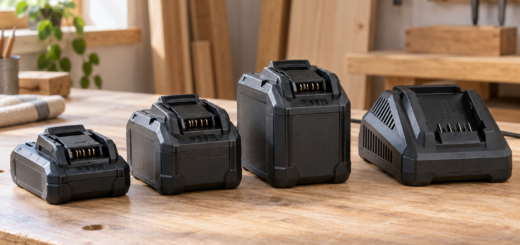
For a fan that fits the existing opening and wiring, a manual saw and a basic screwdriver are often enough. You do not need a premium drill for a handful of mounting screws. A budget drill is also fine for occasional household work if its battery is compatible with tools you already own. In a platform comparison, the cheapest kit can lose its value if replacement batteries are hard to find or cost nearly as much as the tool.
Do not economize by skipping electrical checks, using a damaged extension cord, or forcing a housing into an undersized opening. If cutting drywall, first check for wiring, pipes, joists, and ductwork behind the proposed cut. A powered oscillating tool can make a neat cut, but it can also slice a hidden cable quickly. A jab saw is slower and often safer for a small, uncertain cut. A non-contact voltage tester and a manual drywall jab saw are practical first purchases if you do not already have them.
Fit, airflow, and common failure modes
Match the new unit to the ceiling opening, housing depth, duct, and electrical connection—not just the grille’s visible dimensions. A replacement that needs a larger opening may require a drywall saw and patching. A smaller housing can leave an exposed gap unless the manufacturer offers a larger grille. Check the duct route, too: crushed flexible duct, loose joints, or a disconnected run can leave the bathroom damp even with a new fan.
Another common mistake is buying by airflow alone. A higher-CFM fan may be louder, and a large fan connected to a narrow or restrictive duct may not deliver its rated performance. Check the stated sone rating for noise; lower numbers are quieter. Secure the duct connection with appropriate duct tape or a clamp as specified by the manufacturer, and vent outdoors rather than into an attic.
When to buy tools
For a single replacement, buying only the missing basics is usually better value than purchasing a large tool bundle. Spring and fall promotions can reduce prices on drills and batteries, while holiday sales often bring more kit choices; compare the kit contents because some sale bundles include small batteries that run down quickly. If you already use a cordless platform, a bare tool can make sense. If not, a corded tool avoids battery costs, but it is less convenient overhead and requires careful cord management.
Before checkout, add up the fan, any adapter or duct parts, tester, cutting tool, and fasteners. A low-priced tool is a bargain only if it fits the job and does not create extra work. For most like-for-like fan swaps, a tester, hand tools, and an existing drill are enough; save the powered cutting tools for a larger renovation or a clear repeat use.