Best Budget Tools for a Beginner Learning to Weld
What's inside
As an Amazon Associate I earn from qualifying purchases. This post may contain affiliate links at no extra cost to you.
Start with the welding process, not the shopping cart
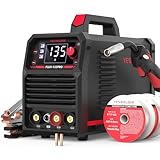
For a beginner working at home, a small inverter stick welder is often the lowest-cost way to learn. Stick welding needs fewer accessories than wire welding, works outdoors in a light breeze, and can handle rusty steel better than MIG. The trade-off is a steeper learning curve: you have to strike and maintain an arc, manage the rod angle, and chip off slag. Thin sheet metal is especially easy to burn through.
If you expect to weld clean, thin steel indoors, a flux-core wire-feed machine may be easier to pick up. It feeds wire continuously, but the wire and contact tips are ongoing costs, and flux-core makes more smoke and spatter than solid-wire MIG with shielding gas. Before buying, check which process your projects actually need and what electrical supply your workspace has.
As an Amazon Associate we earn from qualifying purchases at no extra cost to you.


Spend first on protection and a sound electrical setup
A bargain welder is no bargain if the helmet is unreliable or the power circuit keeps tripping. Put aside roughly $40–$100 for a dependable auto-darkening helmet, $25–$50 for leather gloves, and $20–$50 for a flame-resistant jacket or sleeves. These are broad US price ranges, not a reason to buy the cheapest item available. A fixed-shade helmet can cost less and is fine for some practiced welders, but beginners often find an auto-darkening lens easier for positioning before striking an arc.
Check the machine’s input requirements before checkout. Many compact 120-volt machines can run from a suitable household circuit, but a long, thin extension cord can cause voltage drop and poor performance. Follow the manufacturer’s cord and breaker guidance; do not assume a standard outlet can support the machine at full output. For stick welding, electrode diameter and amperage must also suit the metal thickness and machine capacity. A small machine may be adequate for brackets and light repairs but frustrating on thick plate or long welds.
A practical starter budget
| Item | Typical budget range | Where the cheap option is fine |
|---|---|---|
| 120-volt stick or flux-core welder | $150–$350 | Occasional practice and light repairs, if the machine has clear specifications and appropriate safety protections |
| Auto-darkening helmet | $40–$100 | A basic helmet is fine if it fits securely, has a usable viewing area, and the lens works reliably |
| Gloves and protective clothing | $45–$100 | Entry-level leather gear is suitable; avoid synthetic clothing that can melt or ignite |
| Clamps, chipping hammer, wire brush | $25–$70 | Basic steel tools work; buy more clamps as real projects demand them |
| Electrodes or flux-core wire | $15–$40 to start | A small pack or spool is enough for practice; consumables must match the process and material |
| Angle grinder with safety gear | $40–$100 | A basic corded grinder is usually adequate for occasional cleaning and cut-off work |
These ranges vary with sales, kit contents, and local availability. A realistic entry setup often lands around $300–$650 before buying steel, ventilation equipment, or a dedicated workbench. A kit with a helmet and gloves may reduce the checkout total, but inspect those items rather than treating included gear as automatically adequate.
Compare value by support, not just advertised amperage
When comparing budget machines, look for a readable duty-cycle rating, the input voltage, included cables, warranty terms, and whether consumables are easy to find. A high maximum-amp number alone does not tell you how long the welder can run before cooling down. Duty cycle is commonly stated over a 10-minute period: a 20% rating at a given output means about two minutes of welding followed by eight minutes of cooling at that output.
Low-cost imported machines can work well for hobby use, but manuals, replacement parts, and warranty service vary. Established brands may cost more while offering easier-to-find accessories or more consistent support. For a beginner, those practical differences can matter more than a small increase in advertised output. Compare current prices for 120-volt stick welders and read the specifications before choosing; do not rely on a product title or review count alone.
For a wire-feed setup, compare the cost of the machine plus wire, tips, and any gas equipment the process requires. Gas-shielded MIG can make cleaner welds indoors, but a beginner’s total cost rises with a cylinder, regulator, and refills. A flux-core machine avoids that initial gas expense and is a reasonable choice for outdoor repairs, provided you can manage the extra smoke and slag. Search for 120-volt flux-core welders only after confirming that the unit supports the wire size and polarity setup you want.
Buy the supporting tools you will actually use
A grinder is more useful than a large assortment of specialty welding tools when you are starting out. It removes paint, rust, and mill scale from joint surfaces and lets you trim rough welds. A 4-1/2-inch corded grinder is generally affordable and avoids battery costs; the trade-off is managing the cord. Buy eye protection rated for grinding as well as welding, and keep sparks away from fuel, solvents, dry leaves, and other combustibles. A welding helmet is not a substitute for grinder-rated safety glasses or a face shield.
Start with two or four sturdy clamps, a chipping hammer, and a wire brush. Cheap clamps are acceptable for practice coupons, but weak jaws can slip and ruin fit-up. Do not buy an expensive welding table before you know what size projects you will tackle. A stable, noncombustible work surface and secure workholding matter more than a branded tabletop.
Practice cheaply and shop with a checklist
Spend some money on practice steel from a local metal supplier or reuse clean, known mild steel. Avoid galvanized steel unless you have proper controls and know how to manage the hazardous zinc fumes; a respirator alone does not make unsafe welding conditions safe. Remove paint, oil, and coatings from the weld area, arrange effective ventilation, and keep a suitable fire extinguisher nearby. Beginners commonly get poor fusion from dirty metal, too little heat, or moving too fast. A bead that looks neat can still be weak, so practice on scrap and inspect the result rather than trusting appearance.
Welding machines and grinders often see discounts around major US shopping events and end-of-year sales, but do not buy a larger machine just because its markdown looks impressive. Compare the sale price with the machine’s normal price, warranty, and included accessories. A modest discount on a suitable unit is better value than paying for capacity your circuit cannot use. For accessories, compare auto-darkening helmets and leather welding gloves by fit, lens function, and safety ratings, not by the number of extras in the box.
Before placing an order, make sure you can answer four questions: What process will you learn? What outlet and circuit can you use? What thickness of steel do you expect to weld? And can you get the correct consumables locally? If those answers are clear, a basic machine and sound protective gear are enough to begin. Upgrade only when a real limitation—such as insufficient output, poor duty cycle, or a need for cleaner thin-metal welds—shows up in your work.